
Sweety Win Licence, UKGC Status and Player Protection
 Available in GB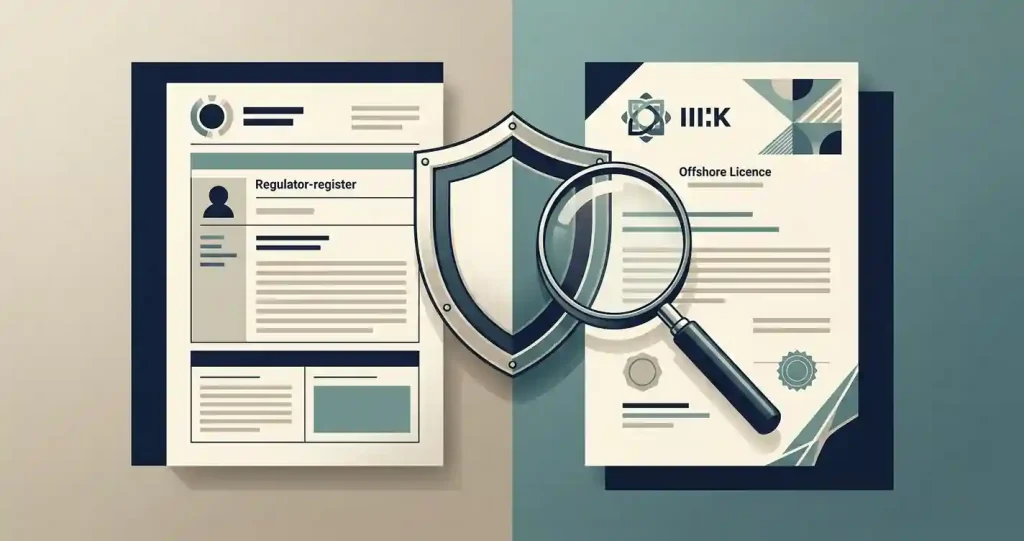
Sweety Win UK Guide
Licensing and player protection
No UK Gambling Commission licence was verified for Sweety Win in the current check. That matters because an operator providing online casino gambling to consumers in Great Britain needs the relevant UKGC remote operating licence. Independent licence databases currently associate Sweety Win’s operator, Fortune Master Limitada, with an Anjouan Gaming licence, but an offshore licence is not a substitute for UKGC authorisation and should not be presented as one.
For a UK reader, the practical question is therefore not simply whether the casino has any licence. It is which regulator stands behind the operator, which protection framework applies, and which complaint or self-exclusion routes can actually be relied on. This page separates those points without turning licensing status into an unsupported claim that playing is either universally legal or illegal for an individual.
Table of Contents
- The key distinction for a UK reader
- What a UKGC licence normally changes
- UKGC status and offshore licensing are different questions
- What no verified UKGC licence does not prove
- Responsible-gambling protection needs specific verification
- What to check before making a deposit
- Licence checks should be repeated, not treated as permanent
- How licensing interacts with registration and account checks
- How to repeat the UKGC check yourself
- How to interpret the Anjouan licence signal
- What Sweety Win’s licence position means for a UK player in practice
- Sweety Win Licence, UKGC Status and Player Protection
The key distinction for a UK reader
The UKGC states that businesses providing remote gambling facilities to consumers in Great Britain need a Commission licence, even when the business itself is based abroad. A remote casino operating licence covers online casino games offered directly to customers through websites, mobile services and similar remote channels.
The current licensing check did not verify a UKGC licence for Sweety Win. That is the most important local licensing fact. It means UK readers should not assume that the casino sits inside the UKGC licensing framework merely because the site can be reached, because prices can be shown in a familiar currency, or because English-language support is available.
Separate from that UK position, independent sources list Fortune Master Limitada as the operator and associate the company with Anjouan Gaming. The exact Anjouan licence number should be confirmed directly in the official regulator record before relying on it.
What a UKGC licence normally changes
A UKGC licence is more than a badge on a footer. It places the operator inside a UK regulatory system with licensing conditions, consumer-protection expectations, responsible-gambling obligations, technical standards and regulatory supervision. The Commission can take action against licensees that fail to meet their obligations.
For the player, that framework affects how account controls, complaints and gambling safeguards are expected to work. The UK licensed environment includes operator self-exclusion and the GAMSTOP ONLINE multi-operator scheme. That does not mean Sweety Win participates in GAMSTOP; no such participation should be assumed. The point is that GAMSTOP is part of the protection structure attached to UK licensed remote gambling, not a generic feature that can be assumed for every offshore casino.
The same distinction applies to complaint escalation. A site outside the UKGC framework should not be presented as though UK licensing remedies automatically cover disputes. Before depositing, a reader should establish what complaint procedure the operator publishes, which regulator or dispute body is actually named, and whether that route is available to the account in question.
UKGC status and offshore licensing are different questions
| Question | Current position | Why it matters |
|---|---|---|
| Is a UKGC licence verified for Sweety Win? | No UKGC licence was verified | Do not assume UK licensing protections apply |
| Who is listed as operator? | Fortune Master Limitada | Operator identity helps connect licence and complaint records |
| Is another jurisdiction reported? | Independent sources associate the operator with Anjouan Gaming | Offshore licensing is a separate regulatory relationship |
| Does an offshore licence equal UKGC authorisation? | No | Different regulators apply different rules and remedies |
| Can UK-specific safeguards be assumed? | No | Features such as GAMSTOP participation need their own verification |
The most useful habit is to keep these questions separate. A casino can be associated with an offshore licensing authority and still have no verified UKGC licence. Conversely, the absence of a verified UKGC licence should not be stretched into claims about every feature of the casino. Games, payment methods, support and bonuses have to be checked on their own evidence.
What no verified UKGC licence does not prove
It does not prove that every payment will fail, every complaint will be ignored, or every game is unsafe. Licensing status is an important trust signal, but it is not a shortcut that turns unrelated facts into conclusions. Licence status should therefore be kept separate from bonus, games, payments, mobile access and support claims.
It also does not justify saying that Sweety Win is “fully legal in the UK” or “illegal in the UK” as a blanket statement. The UKGC rule addresses the operator’s need for a licence when serving consumers in Great Britain. Questions about an individual player’s legal position are different and should not be invented from an operator-licensing check.
That is why this page focuses on verified regulatory status and practical protection. If a player wants to understand the casino as a whole, the Sweety Win UK review combines licensing with payments, games, account checks and reputation evidence.
Responsible-gambling protection needs specific verification
Responsible-gambling tools are only useful when they exist, are accessible and are enforced. In the UK licensed framework, self-exclusion and GAMSTOP form part of a wider protection system. Sweety Win should not be credited with those UK-specific protections unless its participation is actually verified.
For any offshore site, check the account area before depositing. Look for deposit controls, cooling-off or time-out settings, self-exclusion instructions and a clear process for contacting support about gambling harm. If a control is important to you, do not rely on a review-site summary alone. Confirm that the control can be activated on the actual account and keep a record of the request.
This is especially important here because the site’s Sweety Win complaints includes a historical UK self-exclusion dispute. One complaint does not establish a universal policy, but it is relevant evidence when deciding how much confidence to place in an operator’s responsible-gambling processes.
What to check before making a deposit
- Confirm the operator name shown in the current terms and account pages.
- Check whether the casino names a regulator and whether the specific domain is covered by the cited licence.
- Do not interpret an offshore licence as a UKGC licence.
- Check the current cashier rather than assuming every reported method is available to a UK account.
- Read the operator’s complaint procedure and identify the escalation route before a dispute occurs.
- Verify responsible-gambling controls that matter to you before depositing.
- Keep dated copies of material terms that influence your decision.
The payment side deserves its own check because a method shown in a generic review is not automatically available to every account. The Sweety Win payments separates reported methods from UK-specific payment context.
Licence checks should be repeated, not treated as permanent
Regulatory records can change. Operators can add or surrender licences, domains can move between entities, and third-party databases can lag behind official registers. For that reason, a licence page should be treated as a dated verification rather than a permanent label.
If you are checking Sweety Win later, repeat the search by operator name as well as brand name. Fortune Master Limitada is the operator identity linked to Sweety Win in current sources, so a search that looks only for the words “Sweety Win” can miss an entity-level record. The reverse is also true: an entity-level licence should not automatically be assumed to cover every domain unless the regulator record links that domain to the licence.
That domain-level check is particularly important for offshore licences. It is not enough to find a licence number somewhere on the web and assume the current casino domain is covered. The operator, number, status and permitted domain should align.
How licensing interacts with registration and account checks
A registration form can technically accept details without proving that the operator is licensed for the user’s jurisdiction. Those are different layers. Before opening an account, use the Sweety Win registration to check the live country selector, terms and account requirements instead of treating a visible sign-up button as regulatory confirmation.
Likewise, completing KYC does not create a UK licence. Verification is an account-control process. Licensing is the regulator’s authorisation of the operator. Keeping those concepts separate avoids a common mistake in casino reviews, where normal account procedures are presented as evidence of local regulatory approval.
How to repeat the UKGC check yourself
Start with the Gambling Commission public register and search both the casino brand and the operating company. A brand name can differ from the legal entity that holds a licence, so checking only one term can produce an incomplete result. If an entry is found, compare the licensed activities and website domains rather than relying on the company name alone.
For an online casino, the relevant question is whether the operator holds the remote operating permission needed for the activity offered to consumers in Great Britain. A software licence, a licence for a different gambling activity, or an unrelated company record should not be treated as proof that the casino itself is authorised for UK remote casino business.
Save the date of the check. A clean licensing note should say what was found, which entity was searched and when the search was performed. That makes the result easier to revisit if the operator, domain or regulatory status changes later.
How to interpret the Anjouan licence signal
Anjouan is a separate licensing jurisdiction from Great Britain. Independent current licence databases report Fortune Master Limitada as holding an active Anjouan licence, and this is useful evidence that the operator is associated with a licensing framework outside the UK. It does not place the casino under UKGC supervision.
For a reader evaluating that licence, the next questions are practical: Is the exact casino domain listed under the operator’s active licence? Is there a published complaint route? Can the regulator be contacted directly? Are responsible-gambling requirements stated clearly? Those checks give the licence context instead of treating the jurisdiction name as a simple safe or unsafe label.
What Sweety Win’s licence position means for a UK player in practice
The decision point is straightforward. No UKGC licence was verified for Sweety Win, while Fortune Master Limitada is independently associated with Anjouan Gaming. A UK reader should therefore evaluate Sweety Win as an offshore operator, not as a UKGC-licensed casino, and should verify the protections that matter before depositing rather than assuming UK-specific safeguards apply.
Licensing should then be combined with evidence from other areas. Check current payment suitability, account terms and the reputation and complaints record. None of those signals should be exaggerated on its own, but together they provide a more useful picture of the risk and protection available to a UK reader.