
European Roulette at UK Online Casinos: Rules and Odds
 Available in GB
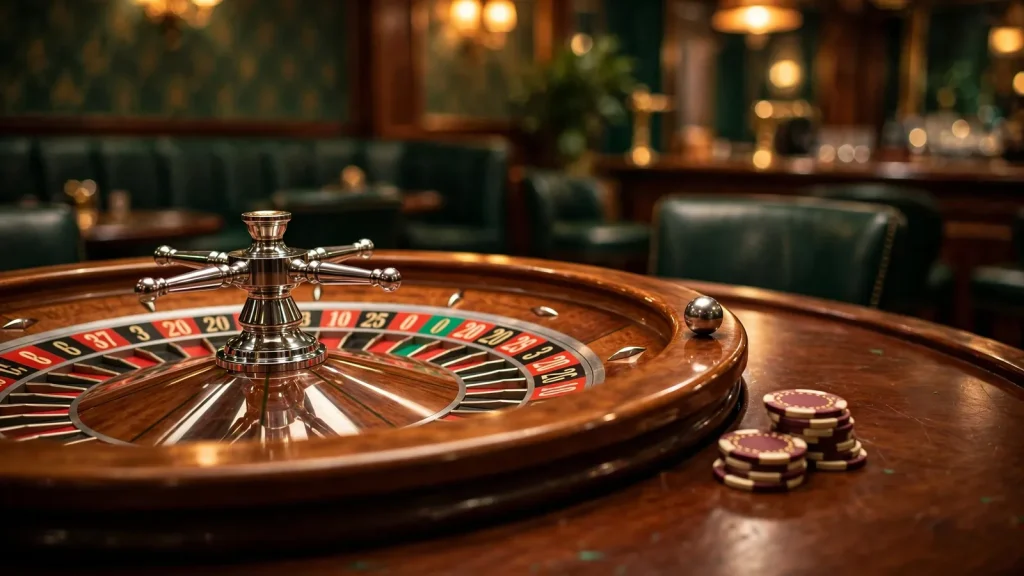
A guide to the single-zero wheel, betting options, table formats and how roulette bonus terms differ from the game itself.
Table of Contents
- Why European Roulette Has a Single Zero
- What a UK-Licensed Roulette Offer Actually Tells You
- Roulette Bets, Payouts and the Limits of Betting Systems
- Finding the Wheel: RNG Roulette and Casino Formats
- Single-Zero Tables, La Partage and Even-Money Bets
- Free Spins, Real-Money Play and Roulette Bonus Terms
- Reading the European Roulette Table Layout
- Roulette-Themed Slots Are a Different Game
- Live Roulette: A Real Wheel, a Different Pace
- European, American and French Roulette Compared
- Sweety Win Games, Slots and Providers
Why European Roulette Has a Single Zero
European roulette is built around a wheel with 37 pockets: the numbers from 1 to 36 and one zero. That single green pocket is the small detail that shapes the game’s mathematics. It does not make every spin predictable, and it does not change the fact that the ball can land in any pocket. Its effect appears over repeated play, through the relationship between the possible outcomes and the game’s payouts.
The number pockets are split between red and black, while zero is green. The colours make the wheel easier to read, but they do not create separate chances that can be influenced by a player. The ball’s landing place is determined by the spin. Each result is a single outcome from the wheel’s set of pockets; the previous result does not remove a pocket or make another one due.
I have seen players treat a run of one colour as evidence that the other must arrive soon. It is an understandable way to look for order in a sequence, but it confuses a visible pattern with a change in the mechanism. A wheel does not keep a memory of earlier spins. If a particular number has just appeared, that result does not make it more or less likely on the next spin.
Choosing a UK online casino for European roulette involves more than the game itself; it is also worth considering how long withdrawals may take. This reference highlights the payout timing provided for each operator.
1. Revery Play
Payout speed: 1-3 business days Revery Play lists a payout speed of 1–3 business days.
2. Dieselwin
Payout speed: 1-3 business days Dieselwin lists a payout speed of 1–3 business days.
3. Britsino
Payout speed: 1-3 business days Britsino lists a payout speed of 1–3 business days.
4. SpinFormula
Payout speed: 1-3 business days SpinFormula lists a payout speed of 1–3 business days.
5. Amunbet
Payout speed: 1-3 business days Amunbet lists a payout speed of 1–3 business days.
6. BeOnBet
Payout speed: 1-3 business days BeOnBet lists a payout speed of 1–3 business days.
7. Zombillion
Payout speed: 1-3 business days Zombillion lists a payout speed of 1–3 business days.
8. SlotoSport
Payout speed: 1-3 business days SlotoSport lists a payout speed of 1–3 business days.
9. Jetsetspins
Payout speed: 1-3 business days Jetsetspins lists a payout speed of 1–3 business days.
10. NightWin
Payout speed: 1-3 business days NightWin lists a payout speed of 1–3 business days.
The zero matters because it is an outcome in its own right, not a neutral space outside the game. A wager may be framed around numbers, colours or groups, but the wheel still has that green pocket alongside the numbered ones. When the ball lands there, it can separate the visible balance between red and black from the way the wager is settled. The precise effect depends on the kind of wager and the table rules, which is why the wheel’s pocket count is only the starting point for understanding a game.
The standard house edge for European roulette is 2.70%. In practical terms, this describes the game’s mathematical advantage for the house over a sufficiently large volume of play. It is not a prediction that a particular session will finish with a loss of that proportion. A short run can produce very different results: a player may win, lose, or leave with little change. The edge describes the long-run structure, not the outcome of an individual visit.
That distinction is easy to miss in an online casino. A digital display presents one result after another, and the sequence can look as though it is telling a story. A cluster of reds can feel meaningful; a run of zeros can feel extraordinary. But the sequence remains a record of chance outcomes, not a signal that reveals what the next spin will produce. The wheel’s arithmetic is stable even when the results appear uneven.
Live Casino Lightning Roulette in the UK: How It Works · Mines Casino Game UK: What the Search Tells You
The single zero is why European roulette has a lower house edge than a version of the game with an additional green pocket. The difference is not a promotional feature or a matter of presentation. It comes from the number of possible outcomes and how the game’s payout structure relates to them. Remove an extra outcome, and the underlying balance changes. The European wheel’s 37-pocket design is therefore more than a label attached to a table: it is the basic condition that gives the variant its stated edge.
This is also why the phrase “better odds” needs careful handling. It can sound like a promise about what will happen to an individual player, when it refers to the game’s mathematical structure instead. European roulette’s 2.70% edge is a comparison of the game’s design over time. It does not tell anyone which number will come up, how long a winning run will last, or when a losing run will end. There is no timing signal hidden in the wheel.
The same point applies when European roulette is offered online. A screen may show a wheel graphic, a ball animation and a result, but the core concept remains the arrangement of 37 possible pockets and the house edge associated with that version. The central question is not whether the display looks convincing; it is which roulette variant is being played and what rules govern its outcomes. The word “European” identifies the single-zero structure.
The standard house edge for European roulette is 2.70%, a mathematical advantage for the house over a large volume of play.
I used to think the zero was mainly a visual marker, the green pocket that made the layout look complete. It is more consequential than that. The numbered pockets offer the outcomes players recognise, while zero helps set the mathematical margin behind the game. Once that is clear, the 2.70% figure reads less like a vague warning and more like a precise description of the design.
The wheel still decides each spin by chance. One green pocket, thirty-six numbered pockets, and a fixed edge.
What a UK-Licensed Roulette Offer Actually Tells You
A roulette game can be presented as a polished product, but the legal status of the offer sits behind the interface. For real-money play in Great Britain, the key question is whether the operator holds the relevant UK Gambling Commission (UKGC) licence. The Commission is the sole regulator of online casino activity in Great Britain. A company’s location does not remove that requirement: remote operators selling gambling to British customers must be licensed here.
That distinction matters when an advert uses phrases such as “available to UK players”. Availability is not the same as lawful authorisation. An offshore casino without a UKGC licence operates outside the British regulatory system and cannot legally offer real-money roulette to British residents. A familiar game title, a UK-facing website or sterling displayed on a cashier page does not substitute for a valid licence.
I have found it useful to treat the licence as an operating condition, not a badge of quality. It tells something important about which rules apply, but it does not rank the roulette tables or establish that a particular game suits every player. The licence number should be checked against the UKGC public register before any deposit. The operator name and the entity named on the register need to line up; a logo alone proves little.
Online Casino Tournaments UK: Free Slot Entry · 3-Reel Slots in the UK: How Online Play Works
Before an account can be used
Legal online gambling is for people aged 18 and over, and operators must verify a customer’s age before allowing a deposit. This is not merely a box to tick after play begins. If an account is being offered a deposit route before age checks are complete, that is a warning about how the operator is handling a basic obligation.
Account controls are another part of the regulatory picture. New customers must be prompted to set a financial limit before their first deposit, and accessible account-level limit controls must remain available. UKGC-licensed operators must also provide deposit limits, loss limits, session time reminders, reality checks and cool-off periods. GamStop self-exclusion must be offered as well.
These tools work differently. A limit can restrict future account activity; a reminder makes elapsed play more visible; a cool-off period pauses access for a chosen interval; self-exclusion is a more formal route to blocking gambling accounts. The useful question is not whether the controls appear somewhere in a help centre, but whether they can be found and used from the account.
Routine protections. Not decoration.
Payments, complaints and game information
Remote gambling operators cannot accept credit-card payments for gambling. The restriction also covers credit-card funding routed through a money service business, and operators cannot accept wallet payments where the wallet lets credit-card funds be used for gambling. A payment method being visible at checkout does not make every funding source acceptable.
A UKGC licensee must provide an internal complaints process and access to an approved Alternative Dispute Resolution service. That gives a customer a route to raise a dispute and, if it remains unresolved, take it to an independent approved service. The operator must also contribute to the Research, Education and Treatment levy. These obligations are part of the system around the game, even though they do not alter how a roulette wheel works.
Verify Operator Status
- Check the operator’s licence number against the UKGC public register
- Confirm the operator name matches the entity on the register
- Verify that account-level limit controls are accessible
- Ensure a financial limit is set before the first deposit
Game information matters too. RTP, or return to player, should be accessible for the roulette game being considered, along with its rules. That information describes the game’s stated mathematical return over extensive play, not a promise about an individual session. European roulette rules explain how the particular table operates; they do not confirm that the site offering it is authorised.
Some pages mix table roulette with a “European roulette slot” label. The name alone does not settle what is being offered: a roulette table and a slot are different game formats, and the product information should make the game type clear.
In my experience, the cleanest assessment separates three things that marketing tends to blend together: permission to operate, protections attached to the account, and the rules of the game itself. A licence addresses the first. Account tools and complaint routes address the second. RTP and game rules address the third. None is a replacement for the others.
Roulette Bets, Payouts and the Limits of Betting Systems
A roulette wager is a choice about how narrowly to call the result. A bet on one number is precise; an outside bet covers a broader outcome. The payout reflects that difference, but it does not make a result more predictable. I have seen players read a large payout as a sign of opportunity. It is better understood as the return attached to a less frequently successful type of call.
Online casino without ID in the UK: what it means
A straight-up bet selects a single number. On European and American roulette, it pays 35:1. A split bet covers two adjacent numbers and pays 17:1. In each case, the ratio describes the payout against the stake; it is not a forecast that the selected number or pair is due. A single-number call may produce a larger return when it wins, but it is also a narrower selection.
Outside bets cover broader categories. Red or black, even or odd, and high or low each pay 1:1. Their simpler payout can make them feel like safer choices, but the label does not alter the fact that the result is determined by chance. A previous run of red results does not make black more likely on the next spin. Nor does a run of losses make a particular bet ready to win.
For anyone learning how to play European roulette, it can help to separate two questions: what does the wager cover, and what does it pay if it wins? A free-play or demo table can be useful for seeing how different selections are settled without risking real money. The same distinction matters when comparing European roulette payouts across tables: the bet type and the table’s stated rules should be clear before play begins. “VIP” describes a presentation or table category, not a different way to make chance predictable.
Betting systems often try to turn a sequence of results into a plan. The Martingale is a familiar example: after each loss, the player doubles the next bet, aiming to recover earlier losses with a win. The logic looks tidy when shown as a short sequence. In actual play, each new spin remains an independent chance event; increasing the stake does not change what the wheel can produce.
Betting Systems
Increasing stakes to recover losses, such as in the Martingale system, cannot change the underlying odds and can quickly consume a bankroll.
The strain appears in the bankroll. Each loss makes the next required stake larger, while a continuing losing streak can consume funds quickly. Even if a win eventually arrives, it does not erase the financial pressure or guarantee that the accumulated losses have been recovered. A system can organise staking. It cannot improve the underlying odds.
That distinction is easy to lose when a strategy is described as “disciplined” or “controlled”. Those words may describe how someone places bets, but they do not change the probability of the next result. I have seen staking plans treated as if they were a forecasting tool. They are not. Chance remains chance.
Finding the Wheel: RNG Roulette and Casino Formats
A European roulette game online does not always show a physical wheel. In an RNG version, a random number generator determines the result and the screen presents it as a simulated spin. The animation gives the outcome a familiar roulette appearance, but the game is software-led rather than a recording of a ball landing on a real wheel.
That distinction matters when comparing casino formats. A site may offer roulette as a self-contained digital game, alongside other table games and slots, or provide versions built around a studio stream. The name “European roulette” identifies the game’s variant, not how the result is produced or what the playing experience will feel like. The format is a separate choice.
Sweety Win Games, Slots and Providers
RNG roulette tends to move quickly because the spin and result are handled within the game interface. There is no need to wait for a physical wheel to be prepared and spun. That faster rhythm can make short sessions feel brisk, though it also means decisions and results arrive close together. In my experience, the practical difference is less about the animation and more about the pace: the software removes the pauses that come with a physical game.
The other noticeable feature is the possible entry stake. RNG roulette can have lower minimum stakes than some other formats; minimums can be as low as 10p. That can make the format accessible for small wagers, but it does not change the underlying chance-based nature of roulette. A low minimum is a table setting, not an advantage over the game.
When comparing online casinos with European roulette, it is useful to separate three questions: which roulette variant is offered, whether the game is RNG or another format, and what minimum stake the specific table displays. The product label alone does not answer all three. A European roulette wheel shown on screen may be a visual simulation, while the same variant can also be presented through a different casino format.
The software presentation can also shape how the game is navigated: the betting interface, result display and pace are part of the experience, while the wheel’s variant determines its pocket arrangement and rules. Those are related but distinct details. A casino with European roulette may provide several versions, so the game title is only the starting point for understanding what is on screen.
For an RNG game, the key description is simple: randomised result, simulated spin, rapid sequence. The single-zero identity belongs to the roulette variant itself, not to the fact that the wheel is simulated. That distinction keeps the format question separate from the table’s defining feature.
RNG Roulette
Software-led games using a random number generator for results, offering a rapid pace and lower minimum stakes.
Live Roulette
Studio-streamed games with a human dealer and physical wheel, providing a more deliberate pace and visible sequence.
Auto-Roulette
Automated formats that may offer the lowest minimum stakes, sometimes starting at 5p.
Single-Zero Tables, La Partage and Even-Money Bets
On a European single-zero wheel, the green pocket is zero; there is no second green pocket to alter the table’s basic odds. That matters most for even-money wagers, where the return looks simple but the treatment of zero determines how much of the stake is at risk.
Red or black, odd or even, and high or low are outside bets. Each covers a broad group of numbers, and a win pays even money: a stake is matched by an equal amount in winnings. The green zero is not red or black, odd or even, or part of either low or high range. When it appears, those selections lose under the standard rule.
La Partage changes that outcome for these bets. If the ball lands on zero, half of an even-money stake is returned rather than the whole wager being lost. The other half is lost. The rule does not turn zero into a winning result; it reduces the damage it causes to a qualifying outside bet.
That distinction is easy to miss in an online table’s compact rules panel. “Even money” describes the payout when the bet wins, not a promise that every losing result costs the full stake. La Partage is a separate table rule, and its scope is specific: it applies to even-money bets, not automatically to every position on the layout.
The difference is reflected in the house edge. On a single-zero table without La Partage, the standard European roulette house edge is 2.70%. For even-money bets where La Partage applies, the edge falls to 1.35%. The rule improves the terms of those particular wagers; it does not change the wheel, make a spin predictable or reduce the edge on inside bets.
Online Bingo in the UK: Formats, Tickets and Slots
Inside bets select individual numbers or small groups, so they are not the same kind of wager as red or black. A single-number selection, for instance, does not become eligible for a half-stake return just because zero is on the wheel. The relevant question is not simply whether the table is European roulette, but which rule governs the bet being placed.
In practice, the betting layout may look familiar across tables while the rule panel supplies the important difference. A table can offer the same outside betting areas yet treat zero differently. The label La Partage should therefore be checked in the game rules, rather than inferred from the single-zero design or from the name of the roulette variant.
There is also a practical limit to what this rule changes. It softens one losing outcome for eligible wagers; it does not remove the zero or make an even-money bet risk-free. The wager still depends on a random spin, and a losing result remains possible. Better terms, not certainty.
Free Spins, Real-Money Play and Roulette Bonus Terms
A European roulette demo and a real-money table can look almost identical on screen. The difference is what is at stake: demo play uses a simulated balance, while real-money play places cash wagers. A free European roulette game can help show how the interface works, but demo results are not real-money wagers and should not be treated as progress towards a bonus requirement.
The same distinction matters when a promotion mentions “free spins”. The phrase can describe a specific bonus feature, but it does not mean that ordinary demo play earns bonus funds. The promotion’s terms determine which games count, whether a bonus must be activated and how wagering is calculated. A European roulette slot demo is also not the same thing as a roulette table; the game format matters when checking eligibility.
Demo play and free European roulette games use simulated balances; these results are not real-money wagers and do not count towards bonus wagering requirements.
What roulette contributes
A wagering requirement sets the amount of qualifying play needed before bonus funds or related winnings can be withdrawn. Roulette wagers may count only partially towards that total. The game weighting is therefore as important as the headline bonus: a wager that counts at a reduced rate makes slower progress than one counted in full.
UK operator terms commonly assign roulette a contribution in the 10%–20% range. A specialist review of bonus terms also reports a sharp format difference: live roulette may count at 10% or 20%, while RNG roulette can count at 100%. These are not universal rates. The operator’s own terms control, and they can distinguish between tables, games and bonus types. Check the wording attached to the specific offer, rather than assuming every roulette wager qualifies in the same way.
That distinction can change the practical value of an offer. A large-looking bonus can be difficult to clear if roulette contributes only a small share of each wager. Conversely, a higher game weighting does not remove other conditions, such as eligible games or a deadline stated in the offer. Read the complete terms before treating bonus funds as part of a playing balance. Fine print matters.
The 2026 wagering cap
A specialist review of UK bonus changes reports that, from January 2026, regulations cap bonus wagering at a maximum of 10x for all UKGC-licensed operators. The cap limits the wagering multiplier; it does not mean every bonus has the same requirement or that all games contribute equally. Roulette’s game weighting still determines how much each qualifying wager adds towards the requirement.
Live Dream Catcher Casino UK: How It Works
For real-money European roulette, the cash balance and any bonus balance should be considered separately. A wager made with bonus funds may be subject to the offer’s game weighting and other conditions, while a demo spin has no real-money stake and does not perform that role. The wording can be promotional; the calculation is mechanical. Read the terms, not the banner.
Reading the European Roulette Table Layout
On a European roulette table, the betting layout is a map of the wheel’s outcomes translated into places to put chips. The numbered grid sits beside the main betting areas. Numbers 1 to 36 appear in three vertical columns, while the single zero has its own separate space at the end of the grid. That separation matters: a chip placed on a number or a marked group of numbers covers only the outcome or outcomes indicated by that position.
The grid’s lines help distinguish the available placements. A chip placed within one number’s box marks a single-number wager. Positions touching the boundary between two boxes indicate a pair; a chip set across a row boundary can cover a larger group. The exact chip position is therefore part of the instruction to the table, not decoration. On a digital layout, the same principle is usually represented by selecting or tapping the relevant area.
The outside betting areas sit beyond the numbered grid. Their labels group numbers by colour, parity or range, so the player can place a wager without selecting an individual number. The layout makes these choices visible, but it does not make one position safer or more likely than another. A European roulette table is an interface for recording a choice, not a prediction tool.
Understanding the Grid
Chips placed within one box mark a single-number wager. Positions touching the boundary between two boxes indicate a pair, while chips set across a row boundary can cover larger groups.
A street bet shows how the markings work. A street is the horizontal row of three numbers in the grid, and the chip goes on the line at the end of that row. That placement identifies all three numbers together; it is different from placing a chip inside one number’s box or across the line between two adjacent numbers. If a street bet wins, its payout is 11:1.
I pay particular attention to boundary lines when reading a new digital table. A chip that appears slightly misplaced on screen can still be registered according to the game’s marked betting zones, so the displayed selection should be checked before the spin begins. On a physical layout, the croupier reads the chip’s position against the printed markings. Either way, the table communicates the wager through location.
This is where “strategy” can be a misleading label. Learning the European roulette table layout helps prevent a placement error and makes the chosen coverage clear; it cannot alter what the wheel will produce. The grid organises decisions. It does not improve them by itself.
Roulette-Themed Slots Are a Different Game
A roulette-themed slot borrows the look of the wheel, its colours or its numbers, but it does not reproduce a roulette table. The distinction is functional, not cosmetic. On a table, wagers are placed on a wheel outcome; in a slot, the player starts a game cycle and the symbols or other game elements determine its result. A wheel graphic spinning across the screen does not make that cycle a roulette spin.
Chicken Road Game in UK Casinos: What’s Known
That matters when a title is described as a European roulette slot, or presented with “3D”, “Gold” or “Platinum” in its name. Those labels may describe the game’s visual treatment or product branding. They do not, by themselves, establish that it uses a European wheel, follows table rules or offers European roulette odds. I have seen familiar imagery do a lot of work in a game’s presentation. It can suggest continuity with roulette while the underlying product belongs to the slots category.
The same applies to a three-dimensional wheel rendered on screen. It remains a slot if the player interacts with it as a slot game rather than placing bets on a roulette layout. A title called European Roulette Gold or European Roulette Platinum should therefore be assessed by its actual game rules and information, not by the words in its name. The branding is a clue to the theme, not proof of the mechanics.
British slot rules apply to these products because they are slots. Online slot autoplay is banned, and each online slot spin must last at least 2.5 seconds. The maximum stake per game cycle is £5 for customers aged 25 and over, and £2 for those aged 18 to 24. Those restrictions do not describe roulette tables. A roulette game does not become a slot simply because its interface includes reels, animations or slot-like presentation; the game’s classification is what determines which rules apply.
This distinction also affects how comparisons are made. A slot’s return information and rules belong to that particular slot, while a roulette table’s probabilities follow its wheel and table rules. Treating a themed slot as a roulette alternative can therefore lead to a false comparison: the shared artwork says little about how outcomes are generated or what the game pays.
British slot rules apply to roulette-themed slots, including a ban on autoplay and a maximum stake of £5 for customers aged 25+ (or £2 for those 18-24).
“Roulette-inspired” is a description of appearance. The mechanics decide the category.
Live Roulette: A Real Wheel, a Different Pace
In a live European roulette game, the screen carries a studio feed rather than an animation of a simulated spin. A human dealer sets the physical wheel in motion, releases the ball and announces the result. The camera makes the process visible; the game still runs through software that accepts bets and records the outcome.
That changes the feel of a session. Each round has a visible sequence: betting opens, the dealer spins, bets close, then the ball settles. There is less opportunity to move straight from one result to the next than in a rapid automated game. I have found that the pauses matter: they make the table feel more deliberate, but they do not alter the odds.
The studio also imposes practical limits. A table has a stated minimum stake, and the amount depends on the game and operator. A specialist review of UK tables reports live roulette minimums starting at 10p, while auto-roulette and speed roulette formats sometimes start at 5p. Those figures are specific to the tables reviewed, not a promise that every game will offer them. Check the live table’s limits before joining.
Bonus terms are another point where the live format can be treated differently. Game weighting means the share of a qualifying wager that counts towards a bonus wagering requirement. A specialist review of PartyCasino and Gala Casino terms reports live roulette weighting of 10–20%. The number is not a general rule: the operator’s promotion terms determine whether live play counts and at what rate. A large-looking bonus can therefore make little progress when played on a live table.
The live feed is the attraction, but it is not a shortcut to better value. A real wheel and dealer change the presentation and pace; they do not make a result predictable. The minimum and any bonus weighting are separate conditions, both worth reading before play.
Studio theatre. Ordinary chance.
Online Slot Payout Percentage: What RTP Means
European, American and French Roulette Compared
The differences between roulette variants are easiest to see in the green pockets. European roulette has 37 pockets: numbers 1 to 36 and one zero. Its house edge is 2.70%. That makes it the familiar reference point when comparing an online European roulette game with other wheels.
American roulette adds a double zero, bringing the total to 38 pockets. The extra green pocket changes the odds across the table, not just the appearance of the wheel: its standard house edge is 5.26%. In a European-versus-American comparison, that is the practical distinction that matters. The same wager can have a less favourable long-run return on the American layout, even though the numbered pockets look similar.
Some American tables have another variation. A specialist review of UK online casino tables describes an American layout with a third green pocket marked 000 and a house edge of 7.69%. That is a specific format, not a figure to assume for every American game; the displayed rules and wheel determine which version is being offered. More green pockets mean more outcomes on which ordinary number-based wagers lose.
Online Keno Casinos in the UK: Games and Odds
French roulette uses the single-zero wheel, but its rules can improve the position on eligible even-money bets. La Partage returns half of such a bet when the ball lands on zero, reducing the edge on those bets to 1.35%. En Prison can also reduce the house edge, which is why French roulette has the lowest edge among standard variants. The benefit depends on the rule being applied to the wager; it should not be treated as a blanket reduction across every bet.
I treat the wheel label as the start of the comparison, not the whole specification. Pocket count sets the basic odds, while table rules can alter the effect of particular outcomes. The distinction is material. One extra pocket changes the baseline; a French rule changes how a zero affects a qualifying wager. Before play, the exact layout and rules are the useful details to compare.
Should I play American or European roulette if I’m in the UK?
European roulette has the lower house edge: 2.70%, compared with 5.26% for American roulette. That describes the games’ long-run mathematics, not the result of any individual spin.
What are inside and outside roulette wagers?
Inside bets cover specific numbers or small groups of numbers, such as a straight-up bet on one number or a split bet on two adjacent numbers. Outside bets cover broader groups, such as red or black, even or odd, and high or low.
Can I use a casino bonus to play American roulette?
That depends on the operator’s bonus terms: roulette wagers may contribute at different rates, and live roulette may be excluded or count less than RNG roulette. Check the terms for the specific game and bonus before playing.
Sweety Win Games, Slots and Providers

Sweety Win Live Casino: Tables and Providers
Sweety Win UK Guide Live dealer games Sweety Win has a distinct live casino section...

Aviator Casino Game UK: Licensing and Play
The guide separates UKGC-regulated operators from offshore sites and explains Aviator’s crash-game format, offers, payments...

3-Reel Slots in the UK: How Online Play Works
A guide to three-reel slot mechanics, real-money stakes, free play and the licensing rules for...

Five-Reel Slots in the UK: How the Format Works
The guide separates a five-column layout from outcomes and explains what demo spins and bonus...

Bonus Buy Slots in the UK: Demo Play Guide
Demo mode lets you inspect a slot’s controls and bonus sequence, while keeping fictional credits...

Fast Payout Online Casino UK: What Keno Shows
Learn how selected spots and catches shape keno results, and why a quick round or...
First Deposit Bonus Casinos in the UK: What to Check
A promotion’s value depends on eligibility, trigger conditions, bonus use and restrictions—not the headline alone....

High-Volatility Slots in the UK: How They Work
Volatility describes the pattern of wins, not a prediction of what any individual play will...

Online Keno Casinos in the UK: Games and Odds
Keno uses a numbered 1–80 card and a separate random draw, while rules, payouts and...

Live Casino UK: Games, Rules and Offers
Live casino combines a human dealer and streamed table action with on-screen controls, while rules...

Low-Volatility Slots in the UK: What to Know
Low volatility describes a tendency towards more frequent, smaller wins—not a promise of steady returns...

Online Slot Payout Percentage: What RTP Means
RTP describes the share of stakes a slot is designed to return over many plays,...

Best RTP Casino Slots UK: Understanding RTP
RTP describes an aggregate long-run pattern, while volatility affects how results can vary from one...
High RTP Slots in the UK: What RTP Can Tell You
RTP describes a game’s long-run theoretical return, while volatility and individual sessions shape very different...

Video Slots in the UK: Reels, Features and Play
From reel layouts and feature rounds to stake limits and casino checks, this guide explains...

Casino Dice Games in the UK: How Online Play Works
The guide separates physical rolls from computer-generated outcomes and places dice formats in the wider...

Chicken Road Game in UK Casinos: What’s Known
The name alone cannot confirm how the game works, whether it is available in the...

Crash casino games in the UK: formats and licensing
Crash games can resemble casino slots, but operator licensing and payment routes change the context....

Crazy Time Live Casino Game Show in the UK
Crazy Time pairs a real-time studio presentation with digital betting controls, while casino terms and...

Deal or No Deal Casino UK: Game and Bonus Guide
A clear look at how the online format relates to the television game, and which...

Fastest Payout Online Casinos in the UK
Payout speed depends on which stage is measured; casino claims may omit the payment method,...
French Roulette Online Casinos in the UK: Rules & Odds
See how the zero, table format, minimum stakes and bonus terms shape the cost and...

Hi-Lo Casino UK: Rules, Card Values and Play
Rules for ties, used cards and reference cards can vary, changing how each higher-or-lower decision...

JetX Casino Game in the UK: What the Label Means
The overview distinguishes marketing language from documented rules and puts demo play, offers and real-money...

Live Baccarat Online Casino UK: How It Works
See how live-dealer baccarat works within a wider casino, from hand decisions and table costs...
Live Blackjack Online in the UK: How Tables Work
A practical look at the dealer stream, table controls, rules, side bets and the limits...

Live Casino Lightning Roulette in the UK: How It Works
A practical look at live-table mechanics, roulette odds, offers and the checks that distinguish a...

Live Dream Catcher Casino UK: How It Works
A practical guide to the dealer-led stream, player interface and limits of claims about a...

Live Roulette UK with English-Speaking Dealers
A practical guide to dealer-led roulette, table formats, betting controls and the limits of claims...

Mines Casino Game UK: What the Search Tells You
A Mines search points to a subject, but it does not confirm a game's rules,...

Monopoly Live Casino UK: Format, Play and Limits
The guide separates the live-studio presentation from game rules, and explains what comparisons, stats, demo...

Online Bingo in the UK: Formats, Tickets and Slots
See how ticket formats shape bingo rounds, and how ticket limits, bonus conditions and slots...
Online American Roulette Casinos in the UK
The 00 pocket distinguishes American Roulette from the single-zero European wheel and changes the odds...

Online Casino Games for Real Cash in the UK
A practical guide to slot stakes, UK casino rules, bonus terms and the conditions that...

Online Casino Tournaments UK: Free Slot Entry
Tournament access can depend on a ticket or buy-in, while free entry describes only the...

Online casino without ID in the UK: what it means
A short sign-up form does not remove identity checks, which may apply before or during...

Plinko casino UK: licensing, play and payments
The guide distinguishes UKGC-regulated services from offshore platforms and explains what to check across play,...