
French Roulette Online Casinos in the UK: Rules & Odds
 Available in GB
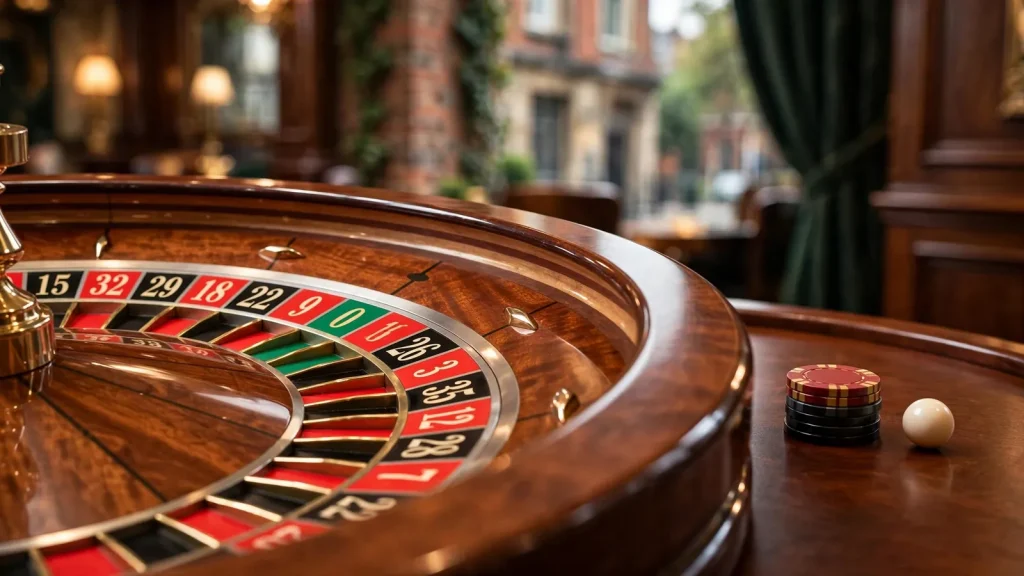
See how the zero, table format, minimum stakes and bonus terms shape the cost and pace of French Roulette online.
Table of Contents
- French Roulette’s Zero—and Why the Rules Matter
- What Makes a French Roulette Casino a Better Fit?
- Live French Roulette: A Real Wheel, a Different Pace
- Low Limits, Table Minimums and the Cost of a Spin
- RNG French Roulette Online: Faster Spins, Different Trade-offs
- Finding French Roulette at a UK Online Casino
- Premium French Roulette: High Stakes, Same Mathematics
- Inside the Roulette Game: Bets and Payouts
- Roulette Systems Cannot Remove the Risk
- French Roulette Bonuses: Contribution and Wagering Caps
- Sweety Win Games, Slots and Providers
French Roulette’s Zero—and Why the Rules Matter
The zero is the pocket that changes the arithmetic of roulette. On an even-money bet, such as red or black, a winning stake earns an equal amount, while a losing stake is lost. The green zero does not belong to either colour. Without a rule that softens its effect, that pocket gives the casino an advantage even when the other 36 pockets are evenly divided between red and black.
A European wheel has 37 pockets: the numbers from 1 to 36 and one zero. An American wheel adds a double zero, making 38 pockets. That extra green pocket matters across the bets on the layout, not just those covering colours. The standard house edge is 2.70% on European roulette and 5.26% on American roulette. On the American basket bet, which covers the zero, double zero, 1, 2 and 3, the edge rises to 7.89%.
Some specialist reviews describe American roulette tables with a third green pocket, marked 000, at UK online casinos. That is a table-specific variation, not a feature to assume from the American label alone; the cited review gives a 7.69% house edge for this version. The practical lesson is simple: the name of a roulette variant is not enough to establish what a table offers. The pocket layout and the rules attached to zero both matter.
What La Partage changes
French roulette is distinguished by rules that alter what happens to certain bets when the ball lands on zero. La Partage applies to even-money bets: half the stake is returned rather than the whole bet being lost. The result is a 1.35% house edge on those bets, compared with the standard European edge of 2.70%.
That reduction is not a change to the chance of the ball landing on any particular pocket. The wheel still determines the result by chance. Instead, the rule changes the financial consequence of one result for a defined class of bets. That distinction is easy to lose in casino descriptions, where “lower edge” can sound like a broad improvement to every wager. It is narrower: La Partage benefits even-money bets when zero appears.
Sweety Win Games, Slots and Providers
En Prison is another French rule associated with zero. Together, La Partage and En Prison give French roulette the lowest house edge among standard variants. The details shown in a game’s rules still matter: a French label alone does not explain how the table handles a zero for every bet type. I have learned to read the rule panel before treating a variant name as a complete description.
Same wheel family, different conditions
The useful comparison is not simply French versus American, or French versus European. It is the combination of the wheel and its zero rules. A single-zero layout has fewer pockets than a double-zero layout, while La Partage changes the loss on zero for even-money bets. Those are separate mechanisms. One changes the set of possible outcomes; the other changes how a particular wager is settled.
This is why the displayed house edge needs context. The 1.35% figure applies to even-money bets under La Partage, not to every bet at the table. The standard European figure of 2.70% describes the European variant, while the American figure is higher because of its double zero. Comparing those figures without checking which bet and rule they refer to can make unlike conditions look interchangeable.
Live Blackjack Online in the UK: How Tables Work
The table layout may look familiar across variants: numbers, colours and outside betting areas. But the zero is not a cosmetic detail. On a single-zero European table, it is the one pocket that disrupts the even split behind red and black. On an American wheel, the double zero adds another such interruption. At a French table, La Partage reduces the impact for even-money bets, and En Prison is part of the rule set that gives the variant its lower edge.
Read the rule, not the label
When I compare roulette conditions, I start with what happens on zero. A table called French roulette should make its relevant rules clear, including whether La Partage and En Prison apply and which bets they cover. If the rules are not visible in the game information, the title alone is not a substitute. Small wording differences can determine whether a stake is partly returned, held under a rule, or settled in another way.
Do
- Read the rule panel for settlement terms
- Check if La Partage and En Prison apply
- Verify which bets are covered by rules
Don’t
- Rely on the “French” label alone
- Assume a lower edge applies to every wager
- Treat a variant name as a complete description
That check matters more than a polished table description. “French” signals a set of conventions, but the settlement terms define the actual play. A player choosing an even-money bet is directly affected by La Partage; someone placing a different kind of wager should not assume the same reduction applies. The house edge is a long-run measure of the game’s built-in advantage, not a prediction of the result of an individual spin.
For anyone comparing a French roulette casino with a European or American table, the starting point is therefore concrete: count the green pockets, identify the rule for zero, and match the stated edge to the bet being considered. French roulette’s appeal rests on that combination of a zero rule and lower edge—not on a promise that any particular spin will go a certain way.
What Makes a French Roulette Casino a Better Fit?
A French roulette table is a better fit when its rules match the way the game is intended to be played—not because the casino has given it a premium label or placed it prominently in a lobby. I compare the actual table rules first. The useful distinction is whether La Partage and En Prison apply, and which bets benefit from them. A French-style name on a game tile is not enough to establish the conditions at the table.
Hi-Lo Casino UK: Rules, Card Values and Play
La Partage has a measurable effect on even-money bets. If the ball lands on zero, half of a qualifying stake is returned; on those bets, the house edge falls to 1.35%. That is materially different from European roulette’s 2.70% house edge. The reduction is not a general discount on every wager: it concerns even-money bets under the stated rule. A table can therefore suit someone who places those bets more than someone whose choices do not receive the same treatment.
That distinction is easy to lose in casino descriptions. “French rules” sounds definitive, but the practical question is which rules are active in the game itself. The table information should make clear whether La Partage applies and whether En Prison is in effect. Where the terms are unclear, the French label alone cannot settle the question. Small print matters.
Compare the rule, not the label
French roulette has the lowest house edge among standard variants because of La Partage and En Prison. That gives a sound basis for preferring it over a standard European table, but it does not make every French roulette offer identical. The relevant comparison is between the conditions attached to the specific game and the bets being made, not between casino names or promotional descriptions.
I would treat the stated edge as a property of the rules, not as a promise about an individual session. Roulette outcomes remain uncertain; a lower house edge describes the game’s mathematical terms, not a result that is due to arrive. The difference matters over the structure of play, not as a forecast for the next spin.
Attention: A lower house edge describes the game’s mathematical terms over the long run, not a prediction of the result for any individual spin.
There is also a useful check against overclaiming. European roulette already has a 2.70% house edge, so a comparison that presents French roulette as a dramatic transformation needs to explain exactly which bet and rule it means. La Partage brings the edge on eligible even-money bets to 1.35%. That is a clear, bounded advantage. It should not be rewritten as “half the risk” across the whole table.
En Prison is part of the reason French roulette ranks lowest among standard variants, but the treatment of a bet depends on the table’s stated terms. I look for those terms before treating a game as a genuine match. If the interface gives only a game name and generic rules, there is not enough to assume that every French rule is being applied.
What “best” should mean in practice
There is no useful universal winner among French roulette casinos without knowing what makes a table suitable. For one player, the deciding point may be the presence of La Partage on even-money bets. For another, it may be whether the complete rules are displayed clearly enough to understand what happens when zero appears. The better offer is the one whose rules can be checked and whose relevant conditions are explicit.
A sound comparison separates three things that are often bundled together: the roulette variant, the table rules, and the casino’s presentation of the game. The variant gives a broad mathematical context. The table rules determine whether the French features are actually in play. The presentation—such as a “featured” or “exclusive” badge—does not change the house edge. Advertising language is not a rule.
Fastest Payout Online Casinos in the UK
It is also worth keeping the scope of the advantage precise. La Partage applies to even-money bets when zero appears; the 1.35% edge belongs to those bets under that condition. The fact that French roulette has the lowest house edge among standard variants does not mean every bet at every French table shares that figure. A careful comparison reads the rules alongside the type of wager, rather than carrying one headline percentage across the whole layout.
When I assess a French roulette offer, I start with the rule text, then check whether the stated edge relates to the bets under consideration. If the wording does not identify the relevant conditions, a confident label cannot fill the gap. No ranking can replace that check. The mechanics are the point.
Live French Roulette: A Real Wheel, a Different Pace
A live French roulette table is not a computer animation dressed up as a casino floor. The game is streamed from a studio, where a human dealer spins a physical wheel and releases a real ball. The result arrives through a camera feed; the wheel and ball are part of the event, rather than images generated by a random number generator.
That distinction changes what the game feels like. The spin has a visible sequence: the dealer sets it in motion, the ball travels around the wheel, then drops into a pocket. I find that physical chain easier to follow than a result appearing on a digital display. It does not make the outcome more predictable. The ball’s movement is still a matter of chance.
A live dealer table features a human dealer and a physical ball drop, whereas an automated presentation may not, regardless of the labels used in the lobby.
“Authentic” is the usual sales word. What it means in practical terms is a streamed studio, a dealer and a physical wheel. It does not tell anyone whether a particular table uses French rules. That needs to be checked in the table’s own information. A French title or flag in a lobby is not a substitute for reading the rules attached to the game.
That point matters because the live format and the roulette variant are separate things. A real wheel can be streamed while the table follows rules that are not the French version being sought. The game information should identify the variant and explain the rules in force. If the display is unclear, the uncertainty is about the offer, not a special property of live play.
There is also a practical difference between watching a spin and watching an animation. A stream gives the result a human pace: the dealer performs the procedure and the ball’s movement can be seen as it happens. That may suit someone who wants the process to be part of the game. It can feel slower than a result delivered by software, but the live format is not simply an animation with a presenter added. The physical wheel is doing the work.
Some lobbies use labels such as “live auto” or group automated tables near live games. I would treat those labels as a prompt to inspect the game details, not as a reliable description of what is on screen. A live dealer table has a human dealer and a physical ball drop; an automated presentation may not. The distinction is visible once the game opens, but the rules and format should be confirmed before play begins.
On UK-facing tables, presentation is only one part of the offer. UKGC-licensed operators must make the game’s RTP information accessible, alongside the applicable rules. The RTP figure is useful context, but it does not forecast a particular session or tell when a ball will land in a given pocket. I would read it as product information, not a promise.
Fast Payout Online Casino UK: What Keno Shows
UKGC-licensed live casino operators must also provide deposit and loss limits, session time reminders, reality checks, cool-off periods and GamStop self-exclusion. Those controls sit outside the studio feed, but they are part of the conditions around real-money play. A polished broadcast does not replace them. Substance over staging.
Low Limits, Table Minimums and the Cost of a Spin
A low table minimum changes the amount needed to join a game; it does not change the roulette wheel or make a spin safer. That distinction is easy to lose in labels such as “low stakes”. In practice, the minimum is an entry condition. The amount staked on each spin determines how quickly a session uses funds, while the format and table rules determine which minimum applies.
A specialist review reports UK live roulette minimums starting at 10p, with auto-roulette and speed roulette sometimes available from 5p. Those figures are useful as reference points, not as a promise about every French roulette table. The minimum can differ between games and operators, so the amount shown on the selected table is the one that matters. A low limit is a specific table condition, not a general feature of every game carrying the French roulette name.
Online Bingo in the UK: Formats, Tickets and Slots
Compare the table, not just the format
Live roulette may suit someone who wants a streamed table, but its minimum is not automatically lower than an automated alternative. Auto-roulette and speed roulette can have lower entry stakes in some cases; the trade-off is that a lower minimum does not establish that the table offers the exact French rules being sought. The title and rules panel should be checked together. A French label alone is not enough to establish the minimum or the rules in force.
I have seen “low limit” used as a broad selling phrase when the useful detail is buried in the table information. The practical check is straightforward: find the minimum stake for that specific game before joining, then confirm that the selected bet can be placed at that amount. If a table displays a minimum higher than the budget intended for a session, a different table or format is the relevant comparison. Marketing copy cannot override the displayed table limit.
Online Keno Casinos in the UK: Games and Odds
The minimum is not the session cost
The entry stake is only one part of the cost. A player can stake the table minimum on every spin, choose a higher amount, or vary stakes from one spin to another where the table permits it. The minimum therefore sets the floor, not a spending plan. A low minimum can make small individual bets possible, but it does not put a ceiling on total losses or determine how long funds will last.
This matters when comparing tables that appear to offer the same low entry point. The minimum may be identical while the pace of play, table rules and available bet options differ. A faster format can lead to more decisions in a session, but a smaller stake per spin does not by itself control the total amount risked. The useful comparison is between the actual minimum, the intended stake and the amount set aside for play. No special label changes that arithmetic.
Crazy Time Live Casino Game Show in the UK
The same caution applies to “standard limit” wording. It does not identify a universal stake level across UK casinos. A displayed minimum is more concrete than a category name, and it can be checked before play begins. High-limit tables are a separate choice of stake range, not a reason to infer that a lower-limit table carries different odds. The table’s rules and the amount placed remain separate questions.
For a low-stakes session, the clearest approach is to treat the minimum as a boundary for joining, not as a recommendation to play or a guarantee of affordability. If the displayed amount is unsuitable, the table is unsuitable. Small entry point. Real exposure.
RNG French Roulette Online: Faster Spins, Different Trade-offs
RNG roulette replaces the physical wheel with a random number generator: software selects the result, then the game presents it through an animation or a simple digital display. The ball shown on screen is not deciding where the result lands. The random selection is the mechanism; the animation is its visual wrapper.
RNG Roulette
Software selects the result, presenting it via animation. Offers faster spins and often lower entry points.
Live Roulette
Streamed from a studio with a human dealer and physical wheel. Provides a human pace and visible sequence of events.
Speed Roulette
A streamlined format that can reach over 150 spins per hour, reducing the interval between rounds.
That difference changes the tempo. There is no dealer waiting for bets to close, no physical ball to settle and no studio sequence to watch before the next round. The game can move directly from one result to the next, so a player can place more wagers in the same period than at a conventional live table. A lower minimum stake may also be available, though that is a separate choice from how the result is generated.
I learned to separate those two selling points. “Fast” describes the interval between rounds; “low stakes” describes the cost of entering a round. Neither changes the random nature of the outcome. A brisk interface can make the game feel more continuous, but it does not make any individual result more predictable.
The pace figures depend on the format being compared. A specialist review reports speed roulette at more than 150 spins per hour, against 80–100 at a standard table. That is a description of the format, not a fixed promise for every game. Some speed tables are live products with a streamlined betting window, while RNG roulette uses software to generate its results. The labels should not be treated as interchangeable.
There is also a separate comparison for American roulette: RNG versions are typically reported at 150 to 200 or more spins per hour, while live dealer play is reported at 50 to 60. Those figures illustrate how much the format can affect turnover, but they do not establish a universal rate for every table or for French roulette specifically. Interface design, round timing and player decisions all affect how quickly a session moves.
Live Roulette UK with English-Speaking Dealers
The trade-off is mostly experiential. RNG play removes the human dealer and the visible physical wheel, but it also removes the pauses that make a live session feel like a sequence of observed events. For someone who wants to make decisions without waiting through a studio presentation, that can be useful. For someone who values the wheel, dealer and shared table atmosphere, the quicker cycle may feel more mechanical than efficient.
A French roulette label still needs to be read alongside the game rules. RNG describes how the result is generated; it does not, by itself, confirm which wheel rules or special conditions apply. I check the rules panel rather than assuming that a game’s name tells the whole story. The animation can look familiar while the underlying terms differ.
The practical point is that speed changes exposure to the game, not the chance behind a spin. More rounds can mean more decisions and a faster-moving balance. The software can present results rapidly, but it cannot turn a sequence of random outcomes into a forecast.
RNG French roulette is therefore best understood as a format choice: less waiting, no physical wheel, and often a lighter entry point than some live tables. The benefit is control over pace. The cost is that the visual theatre and human rhythm of live roulette are absent. Fast, not predictive.
Finding French Roulette at a UK Online Casino
When choosing an online casino for French roulette in the UK, payout timing is one practical detail to consider. The verdicts below note the withdrawal speed provided for each operator.
1. Revery Play
Payout speed: 1-3 business days Revery Play has a stated payout speed of 1–3 business days.
2. Dieselwin
Payout speed: 1-3 business days Dieselwin has a stated payout speed of 1–3 business days.
3. Britsino
Payout speed: 1-3 business days Britsino has a stated payout speed of 1–3 business days.
4. SpinFormula
Payout speed: 1-3 business days SpinFormula has a stated payout speed of 1–3 business days.
5. Amunbet
Payout speed: 1-3 business days Amunbet has a stated payout speed of 1–3 business days.
6. BeOnBet
Payout speed: 1-3 business days BeOnBet has a stated payout speed of 1–3 business days.
7. Zombillion
Payout speed: 1-3 business days Zombillion has a stated payout speed of 1–3 business days.
8. SlotoSport
Payout speed: 1-3 business days SlotoSport has a stated payout speed of 1–3 business days.
9. Jetsetspins
Payout speed: 1-3 business days Jetsetspins has a stated payout speed of 1–3 business days.
10. NightWin
Payout speed: 1-3 business days NightWin has a stated payout speed of 1–3 business days.
A roulette lobby can look much the same whether it belongs to a properly regulated operator or a site outside the British system. The difference is not a badge in the footer; it is whether the operator is authorised to take real-money play from customers in Great Britain. The UK Gambling Commission (UKGC) is the regulator responsible for online casino gambling there. An overseas address does not remove the licensing requirement: operators selling remote gambling to British customers must hold the relevant UKGC licence.
That matters for French roulette in particular when the table is live. A platform without a valid UKGC licence cannot legally offer real-money live roulette to British residents. Offshore sites may still be reachable, but access is not the same as authorisation. A licence is the framework that places the operator’s conduct under British rules and gives customers access to required safeguards and complaint routes.
I treat the licence check as a separate task from checking whether a game is listed. The UKGC public register identifies licensed operators; the name on the register should correspond to the company running the casino, not merely a familiar brand name displayed on the site. The licence number should be checked there before any deposit. A logo alone proves little.
Licensing Risk Operators selling remote gambling to British customers must hold a valid UKGC licence to lawfully provide real-money play.
What the licence changes in practice
A UKGC-licensed operator must verify a customer’s age before allowing funds to be deposited into a gambling account. For adults aged 18 and over, legal online gambling depends on using an operator holding the appropriate UKGC licence. The distinction is practical: a polished site and a French roulette tile do not, by themselves, establish that the operator can lawfully serve British customers.
Account controls are also part of the regulated service. New customers must be prompted to set a financial limit before making their first deposit, and account-level limit controls must remain accessible. Operators must provide deposit and loss limits, session time reminders, reality checks, cool-off periods and GamStop self-exclusion. These are operational requirements, not optional features added to make a lobby look responsible.
The gambling information should be available before play, too. UKGC-licensed operators must make RTP information accessible, alongside the relevant game information and rules. In my experience, this is the sort of detail easily overlooked when the first check is simply whether a French roulette table appears in the menu. The terms matter. So does the identity of the operator behind the menu.
High-Volatility Slots in the UK: How They Work
Payment restrictions form another part of the same framework. UKGC licensees cannot accept credit cards for gambling, including where a money service business routes credit-card funds or a wallet allows those funds to be used for gambling. The operator must also provide an internal complaints process and access to an approved Alternative Dispute Resolution service. Licensees are required to contribute to the Research, Education and Treatment levy.
None of these controls improves the outcome of a roulette spin. They do establish which rules apply to the operator and what protections exist around the account. The sensible order is straightforward: confirm the operator on the UKGC register, then check the game and its published information. A table listing is not a licence.
Premium French Roulette: High Stakes, Same Mathematics
A premium French roulette table is defined by the terms of entry, not by a different set of odds. The label may signal a higher betting range or a more exclusive presentation, but it does not change what determines the result: the wheel, the rules in force and chance. A polished table is still roulette.
A premium label may signal higher betting ranges or exclusive presentation, but it does not alter the wheel’s mathematics or the probability of a result.
I have seen how “premium” works as a sales word. It makes the setting sound like an advantage. In practice, the relevant distinction is whether the table’s minimum and maximum stakes suit the amount a player intends to risk. A higher limit gives room to place larger wagers; it does not make a winning result more likely or reduce the cost of a losing one.
That matters particularly in French roulette, where the game’s rules can affect the house edge on eligible bets. Those rules apply because the table offers them, not because it carries a premium label. The table information should make the rules and limits clear before play begins. If the label is prominent but the conditions are hard to find, the marketing is doing more work than the game description.
Higher stakes also change the practical impact of each decision. The mathematical edge is applied to the wager, so increasing the stake increases the amount exposed to that edge. A run of losses can therefore have a larger effect on a bankroll, even though the underlying chances have not shifted. Same wheel. Larger consequences.
Premium French roulette casinos should be compared on the actual table terms, not on claims of prestige or exclusivity. A higher limit may be appropriate for a player seeking that scale of play, but it is not a better-value version of the game by itself. Nor does a grander studio presentation alter the probability of the next result.
The useful distinction is simple: the table may be premium in its limits or presentation; the mathematics remains the mathematics.
Live Casino Lightning Roulette in the UK: How It Works
Inside the Roulette Game: Bets and Payouts
A roulette bet is defined by where the chip sits on the layout. A chip placed on one number is a straight-up bet; a chip covering a boundary can select neighbouring numbers, while a marker in an outside-bet area covers a broader group. The table layout is the practical guide: the position determines which result wins and the payout attached to it.
A straight-up bet selects a single number. On European and American roulette, it pays 35:1 if that number comes up. The larger payout reflects the narrow outcome covered by the wager: only one pocket matches. The same stated payout applies across those two wheel types, though the number of pockets differs.
A split bet covers two adjacent numbers. The chip is placed across the line separating them, so either number can produce a win. Its payout is 17:1. A street bet covers a horizontal row of three numbers; the chip goes on the outer edge of that row. It pays 11:1. These are inside bets because they mark specific numbers or compact groups on the numbered grid.
Outside bets sit beyond that grid and cover broader categories. Red or black, odd or even, and high or low each pay 1:1. The chip goes in the corresponding labelled area, and the bet wins when the result falls within that category. A zero does not belong to red or black, odd or even, or high or low, so those categories do not cover every pocket.
Payouts for common bets
- Straight-up: Pays 35:1
- Split: Pays 17:1
- Street: Pays 11:1
- Outside bets (Red/Black, Odd/Even, High/Low): Pay 1:1
The ratio is the advertised winnings relative to the stake, not a promise that a bet will land. The interface normally shows the selected area and stake before the spin, while the table rules set the payout. I have seen players focus on the number displayed beside a bet and overlook the shape of the selection: a single pocket, a line between two, or a row of three. Placement is the whole distinction.
On an online French roulette table, the layout still determines the bet and its stated payout. The French rules affect what happens to certain even-money bets when zero appears; they do not turn a straight-up selection into a different type of bet. Keep the two mechanics separate. One is placement. The other is settlement.
Roulette Systems Cannot Remove the Risk
A staking plan can organise bets; it cannot tell a roulette wheel what to do. The Martingale is the familiar case: after every loss, the player doubles the next bet, intending to recover earlier losses when a win eventually arrives. The arithmetic looks neat on paper. The sequence does not make a win more likely.
I have seen “recovery system” used as if it were a feature of the game. It is not. Each result remains a matter of chance, and previous losses do not provide information about the next spin. That distinction gets blurred when a run of losses is described as something a player can simply stake their way through.
The practical problem is the rising exposure. Every loss calls for a larger next bet, so a losing streak can put increasing pressure on a bankroll. The plan depends on being able to continue raising the stake until a win occurs; in real play, available funds are not unlimited. A single eventual win does not erase the risk taken to reach it.
Live Baccarat Online Casino UK: How It Works
This matters when playing French roulette online as much as at any other roulette table. A staking system changes the pattern and size of bets, not the underlying uncertainty of the result. It can also make losses accumulate faster than a flat staking approach, precisely because the next wager grows after each setback.
I once treated a tidy progression as a form of control. It was only control over the stake. Not the outcome.
French Roulette Bonuses: Contribution and Wagering Caps
A French roulette table can appear in a casino bonus lobby without being a useful way to clear bonus funds. The key detail is game weighting: the share of each qualifying wager that counts towards the wagering requirement. Most UK operators count roulette wagers at 10% to 20%, so a stake may contribute only a fraction of its value to the required turnover. The game’s presence is not the same as full eligibility.
Deal or No Deal Casino UK: Game and Bonus Guide
I have found that the wording in bonus terms matters more than the promotional label. Some terms distinguish roulette from other casino games; others set separate treatment for particular formats. Before accepting an offer, the relevant checks are whether French roulette qualifies, what game weighting applies, and whether any table or game types are excluded. A low contribution rate can make roulette a slow way to meet a requirement, even when play is permitted.
A specialist review reports that UK regulations have capped bonus wagering at a maximum of 10x since January 2026 for all licensed operators. That sets a ceiling on the wagering multiple, not a promise that every offer uses the maximum or that every game counts equally. The operator’s own bonus terms still determine the qualifying games and weighting within that limit.
The practical distinction is simple: a cap controls how much wagering can be required, while game weighting controls how quickly eligible roulette stakes count towards it. Read both conditions together. A headline bonus is only one part of the calculation.
Sweety Win Games, Slots and Providers

Sweety Win Live Casino: Tables and Providers
Sweety Win UK Guide Live dealer games Sweety Win has a distinct live casino section...

Aviator Casino Game UK: Licensing and Play
The guide separates UKGC-regulated operators from offshore sites and explains Aviator’s crash-game format, offers, payments...

3-Reel Slots in the UK: How Online Play Works
A guide to three-reel slot mechanics, real-money stakes, free play and the licensing rules for...

Five-Reel Slots in the UK: How the Format Works
The guide separates a five-column layout from outcomes and explains what demo spins and bonus...

Bonus Buy Slots in the UK: Demo Play Guide
Demo mode lets you inspect a slot’s controls and bonus sequence, while keeping fictional credits...

Fast Payout Online Casino UK: What Keno Shows
Learn how selected spots and catches shape keno results, and why a quick round or...
First Deposit Bonus Casinos in the UK: What to Check
A promotion’s value depends on eligibility, trigger conditions, bonus use and restrictions—not the headline alone....
High-Volatility Slots in the UK: How They Work
Volatility describes the pattern of wins, not a prediction of what any individual play will...

Online Keno Casinos in the UK: Games and Odds
Keno uses a numbered 1–80 card and a separate random draw, while rules, payouts and...

Live Casino UK: Games, Rules and Offers
Live casino combines a human dealer and streamed table action with on-screen controls, while rules...
Low-Volatility Slots in the UK: What to Know
Low volatility describes a tendency towards more frequent, smaller wins—not a promise of steady returns...

Online Slot Payout Percentage: What RTP Means
RTP describes the share of stakes a slot is designed to return over many plays,...

Best RTP Casino Slots UK: Understanding RTP
RTP describes an aggregate long-run pattern, while volatility affects how results can vary from one...
High RTP Slots in the UK: What RTP Can Tell You
RTP describes a game’s long-run theoretical return, while volatility and individual sessions shape very different...

Video Slots in the UK: Reels, Features and Play
From reel layouts and feature rounds to stake limits and casino checks, this guide explains...

Casino Dice Games in the UK: How Online Play Works
The guide separates physical rolls from computer-generated outcomes and places dice formats in the wider...

Chicken Road Game in UK Casinos: What’s Known
The name alone cannot confirm how the game works, whether it is available in the...

Crash casino games in the UK: formats and licensing
Crash games can resemble casino slots, but operator licensing and payment routes change the context....

Crazy Time Live Casino Game Show in the UK
Crazy Time pairs a real-time studio presentation with digital betting controls, while casino terms and...

Deal or No Deal Casino UK: Game and Bonus Guide
A clear look at how the online format relates to the television game, and which...

Fastest Payout Online Casinos in the UK
Payout speed depends on which stage is measured; casino claims may omit the payment method,...

Hi-Lo Casino UK: Rules, Card Values and Play
Rules for ties, used cards and reference cards can vary, changing how each higher-or-lower decision...

JetX Casino Game in the UK: What the Label Means
The overview distinguishes marketing language from documented rules and puts demo play, offers and real-money...

Live Baccarat Online Casino UK: How It Works
See how live-dealer baccarat works within a wider casino, from hand decisions and table costs...
Live Blackjack Online in the UK: How Tables Work
A practical look at the dealer stream, table controls, rules, side bets and the limits...

Live Casino Lightning Roulette in the UK: How It Works
A practical look at live-table mechanics, roulette odds, offers and the checks that distinguish a...

Live Dream Catcher Casino UK: How It Works
A practical guide to the dealer-led stream, player interface and limits of claims about a...

Live Roulette UK with English-Speaking Dealers
A practical guide to dealer-led roulette, table formats, betting controls and the limits of claims...

Mines Casino Game UK: What the Search Tells You
A Mines search points to a subject, but it does not confirm a game's rules,...

Monopoly Live Casino UK: Format, Play and Limits
The guide separates the live-studio presentation from game rules, and explains what comparisons, stats, demo...

Online Bingo in the UK: Formats, Tickets and Slots
See how ticket formats shape bingo rounds, and how ticket limits, bonus conditions and slots...
Online American Roulette Casinos in the UK
The 00 pocket distinguishes American Roulette from the single-zero European wheel and changes the odds...

European Roulette at UK Online Casinos: Rules and Odds
A guide to the single-zero wheel, betting options, table formats and how roulette bonus terms...

Online Casino Games for Real Cash in the UK
A practical guide to slot stakes, UK casino rules, bonus terms and the conditions that...

Online Casino Tournaments UK: Free Slot Entry
Tournament access can depend on a ticket or buy-in, while free entry describes only the...

Online casino without ID in the UK: what it means
A short sign-up form does not remove identity checks, which may apply before or during...

Plinko casino UK: licensing, play and payments
The guide distinguishes UKGC-regulated services from offshore platforms and explains what to check across play,...