
Monopoly Live Casino UK: Format, Play and Limits
 Available in GB

The guide separates the live-studio presentation from game rules, and explains what comparisons, stats, demo play and bonus terms can show.
Table of Contents
- Monopoly Live in the UK: What the Casino Format Actually Means
- Playing Monopoly Live Online: The Practical Trade-Offs
- What “Best” Means When Comparing Monopoly Live Casinos
- Playing and Trying the Game Without Treating It as a Shortcut
- The Live Casino Game Show Context—and the Blackjack Contrast
- Roulette Variants, Odds and the Limits of “Strategy”
- Casino Sites and the Stakes Behind the Interface
- Live Casino Stats and Tips: What They Can—and Cannot—Tell You
- Demo Play: Practice, Not Real-Money Winnings
- Free Play, Reviews and the Small Print on Bonuses
- Sweety Win Games, Slots and Providers
Monopoly Live in the UK: What the Casino Format Actually Means
The word “live” describes how a casino game is presented, not a special legal status. In a live-dealer game, gameplay is streamed in real time from a studio where a human dealer is present. Bets are placed through an on-screen interface. A standard digital casino game, by contrast, is run by software rather than shown as a live studio session.
That distinction matters when the name Monopoly Live appears in a casino menu. The label places the game in a live-casino setting, but the label alone does not establish its precise rules, equipment, bonus mechanics or payout structure. Those details belong to the game’s own rules and paytable. A familiar brand name is not a substitute for reading them.
What “live” tells the player
A live feed makes the studio activity visible as it happens. The dealer is part of the presentation, while the digital interface handles the player’s selections and betting. This creates a different experience from a game whose results are generated and displayed entirely by software. It does not, by itself, say anything about whether a particular game offers particular features or how its outcomes are determined.
I have seen the word “live” do a lot of work in casino marketing. It can imply presence and participation, but it is first a description of the format. The practical distinction is straightforward: one format shows a human dealer and a real-time studio stream; the other presents a software-run game on screen. The details still matter.
A casino may group a game under a live-casino heading, but the heading is not a full explanation of the game. Rules determine what actions are available and how outcomes are settled. The paytable explains the stated returns for qualifying results. Without checking those materials, it is easy to mistake the atmosphere of a live studio for information about the mechanics.
Online Bingo in the UK: Formats, Tickets and Slots
The UK licensing condition
For a UK player, the key starting point is the operator’s legal status. Live-dealer casinos are legal in the UK when they hold a licence from the UK Gambling Commission. Remote gambling operators serving the British market must hold the relevant Commission licence, regardless of where the business is located. A studio stream does not exempt the casino from that requirement.
This is a condition on the operator, not a feature of Monopoly Live itself. The game’s appearance in a casino lobby does not independently establish that the site is authorised to offer gambling to UK customers. Nor does a studio presentation change the rules that apply to remote gambling. The relevant question is whether the operator holds the appropriate UK licence.
The Gambling Act 2005 governs gambling in England, Wales and Scotland; Northern Ireland is outside that Act’s scope. The broader consumer-facing point remains that online gambling in the UK is legal through licensed and regulated sites. That legal framework is separate from the entertainment theme, studio design or branding used for an individual game.
A name is not a rules summary
“Monopoly Live” combines a recognisable title with a live-casino label. Neither part should be treated as a complete explanation. A brand can make a game easy to identify, while the word “live” signals a streamed format; neither tells the player how a round works. The rules and paytable are where those particulars belong.
This is where promotional language can blur categories. “Immersive” describes an impression, not a measurable rule. “Live” identifies the presentation format, not a promise about what happens in every round. In my experience, the cleanest way to read casino copy is to separate the description of the experience from the conditions that govern play. The former attracts attention; the latter defines the game.
The same separation applies to the operator. A site can display a live game prominently, but presentation is not proof of licensing. The UK Gambling Commission licence is the relevant regulatory requirement for an operator offering remote gambling to customers in the British market. Branding and game menus cannot replace it.
Attention: A studio presentation or a recognizable brand name is not proof of licensing. Only a UK Gambling Commission licence ensures the operator is authorized to serve the British market.
For anyone assessing a Monopoly-branded live casino game, the basic categories are therefore distinct: the game’s rules explain its mechanics, the live format explains that gameplay is streamed from a studio with a human dealer, and the operator’s licence establishes whether it can legally serve the market. Treating those as separate questions avoids reading more into the title than it says.
No shortcut. A live label describes the format; the rules and the operator’s regulatory status do different jobs.
Playing Monopoly Live Online: The Practical Trade-Offs
A streamed table changes the rhythm of a casino game. Instead of software producing each round on the player’s device, a live dealer game sends real-time footage from a studio, where a human dealer runs the action. Bets are entered through an on-screen interface. That combination of video and software is the practical distinction behind playing Monopoly Live online: the screen is not simply animating a result generated locally.
The distinction matters because a live round has to accommodate events happening in sequence. The dealer acts, the interface opens for bets, betting closes, and the round continues. A digital game can move through its equivalent stages more quickly because it does not wait for a person to perform them. The live format is slower. That is not a flaw in the stream; it is part of the format.
The pace affects how a session feels. Digital play can make repeated rounds feel almost continuous, while a studio feed has pauses between decisions and results. Some of that time is the dealer’s process, some is the betting window, and some is simply the transition from one round to the next. From behind the counter, I saw how promotional language often presents “live” as an upgrade. In practice, it is a different operating tempo. More human presence; less speed.
Mines Casino Game UK: What the Search Tells You
That tempo can also change how long a balance lasts. A slower cadence means fewer rounds can occur in the same stretch of time than in a fast digital game, but it does not make the underlying gambling safer or improve the chance of a favourable result. It changes the experience, not the mathematics. The distinction is easy to lose when a live studio is presented as entertainment first and wagering second.
A live table also depends on a stable internet connection. The game is being transmitted as it happens, while the betting interface must remain usable. A weak or interrupted connection can make it harder to follow the table or interact at the right point in a round. This is a more direct dependency than with a game that runs as software on the device. The stream and the controls are part of one session; a clear picture alone is not the whole requirement.
That does not mean every pause or delay indicates a problem. A live dealer has to conduct the round in real time, and the stream reflects that process. It does mean the experience is less suited to a connection that regularly drops or struggles with video. In practical terms, a live game asks for attention to both the table and the device’s connection. A digital version may be less dependent on a continuing studio feed, though it still relies on the casino service and interface.
Unlike fully digital games, the live format is slower because it must accommodate a human dealer’s actions and real-time studio sequences.
Stakes are another point where assumptions can travel too far. A specialist review has reported that many live roulette and baccarat tables begin at around 20p, while blackjack tables often have higher starting limits. That describes those named games, as reported in that type of source; it does not establish a starting stake for Monopoly Live. A live game’s minimum is set at table level, and the figure displayed for one game cannot safely be carried over to another.
The studio format is not a guarantee of a low entry point. A table may feel accessible in presentation while its minimum bet sets a firm floor for each round. That floor affects how much a short session can cost, particularly when the pace is slower and each wager remains active until the round ends. The useful comparison is not “live versus digital” as a matter of prestige. It is what the table actually requires, alongside the pace and connection conditions of the format.
For Monopoly Live, the key practical expectation is therefore the general live-casino one: a human-led studio feed, betting through the screen, a slower sequence than a fully digital game, and a need for reliable connectivity. The exact table conditions should be read on the game interface rather than inferred from another live title. A familiar name does not make every table interchangeable.
What “Best” Means When Comparing Monopoly Live Casinos
If you’re looking for Monopoly Live casino options in the UK in 2026, payout speed is one practical detail to check. This list gives a concise reference point for that aspect.
1. Revery Play
Payout speed: 1-3 business days Revery Play lists a payout speed of 1–3 business days.
2. Dieselwin
Payout speed: 1-3 business days Dieselwin lists a payout speed of 1–3 business days.
3. Britsino
Payout speed: 1-3 business days Britsino lists a payout speed of 1–3 business days.
4. SpinFormula
Payout speed: 1-3 business days SpinFormula lists a payout speed of 1–3 business days.
5. Amunbet
Payout speed: 1-3 business days Amunbet lists a payout speed of 1–3 business days.
6. BeOnBet
Payout speed: 1-3 business days BeOnBet lists a payout speed of 1–3 business days.
7. Zombillion
Payout speed: 1-3 business days Zombillion lists a payout speed of 1–3 business days.
8. SlotoSport
Payout speed: 1-3 business days SlotoSport lists a payout speed of 1–3 business days.
9. Jetsetspins
Payout speed: 1-3 business days Jetsetspins lists a payout speed of 1–3 business days.
10. NightWin
Payout speed: 1-3 business days NightWin lists a payout speed of 1–3 business days.
“Best” is a label, not a regulated standard. A casino can use it in a headline without proving that its terms, service or game conditions suit every player. I would treat a claim that a site is the best Monopoly Live casino as a prompt to inspect what can actually be checked, rather than as a verdict.
The first check is legal status. Live-dealer casinos are legal in the UK when they hold a UK Gambling Commission licence. Remote operators offering gambling to customers in Great Britain must hold the relevant Commission licence, wherever the operator is based. A brand name, polished presentation or claim to be “trusted” does not replace that licence. The operating company and the licence should match; a familiar-looking site is not enough.
That distinction matters because a comparison is only useful once the legal threshold is met. An unlicensed operator is not an equivalent alternative with a different style. It sits outside the UK regulatory system. The practical comparison should therefore begin with whether the operator is licensed to serve the market, then move on to the conditions that affect the individual experience.
Compare conditions, not superlatives
Casino pages often present the game itself as the main attraction. But two sites may promote the same named title while differing in the surrounding terms. A useful comparison separates the game from the account conditions: what must be accepted to participate, whether a promotion changes those conditions, and what restrictions apply to any associated offer.
The word “best” can obscure that distinction. It implies a single winner, when suitability depends on what matters to the player and what the operator actually offers. I have seen promotional language do this work: “exclusive” sounds like an advantage, but the operative detail is in the terms attached to it. The label is easy. The conditions are the product.
Do
- Check the operator’s legal license status
- Inspect the specific game rules and paytable
- Read the full terms of any associated offer
Don’t
- Rely on superlatives like “best” or “exclusive”
- Assume one live game’s conditions apply to another
- Use promotional summaries as a substitute for terms
For Monopoly Live, the name alone does not establish what a particular casino offers or how its rules are presented. The relevant material is the operator’s own game information and applicable terms. If the description of a feature is unclear, a comparison should not fill the gap with assumptions borrowed from another casino or another game.
Rules, results and claims
Rules should be treated as operating information, not as a promise of a particular outcome. The game’s stated rules and paytable are the place to establish how play is described at that casino. A site’s marketing summary may be shorter, but it should not be mistaken for the full terms governing the game.
The same applies to a displayed result. A result describes an outcome; it does not, by itself, establish what will happen in a later round. “Hot” or “due” are persuasive words, not evidence that a future result can be read from past ones. A tracker may organise information, but it should not be presented as a way to forecast outcomes.
A comparison of Monopoly Live casinos should also distinguish between a game claim and a bonus claim. A bonus may have conditions that affect whether it can be used on live games, and terms can specify how eligible play contributes to wagering requirements. Those details are not interchangeable between operators. They need to be read in the current offer’s rules, rather than inferred from a general welcome message.
I would look for the exact eligibility wording, game contribution, any maximum-bet condition and the point at which the offer can be withdrawn or expires. The existence of a bonus is not the same as its value to a particular player. If the terms are hard to locate or the promotional summary leaves a material condition unresolved, that is a poor basis for comparison. No guesswork.
Online Keno Casinos in the UK: Games and Odds
A practical standard for “best”
A defensible shortlist is therefore built from verifiable operating conditions: a current UK Gambling Commission licence, clearly presented game rules, and terms that can be understood before opting into an offer. That approach will not produce a universal ranking. It can identify whether a particular casino meets the conditions that matter to a particular player.
For a page titled “best Monopoly Live casinos UK 2026”, the year does not make a ranking reliable. Offers and operating details can change, so dated promotional claims should be checked against the current operator terms. A review or comparison can help organise those details, but it should not replace the licence check or the underlying rules.
My own test is simple: remove the adjectives and see what remains. The licence, the rules and the conditions are checkable. “Best” is not.
Playing and Trying the Game Without Treating It as a Shortcut
Before starting Monopoly Live for real money, the useful work happens outside the round: understanding the rules, checking the paytable and deciding what the session is allowed to cost. A familiar brand or game-show presentation can make a casino game feel easier to read than it is. It does not make the outcome predictable.
I would treat the rules as the first screen to inspect, not a formality to click through. The rules explain what actions are available and how a result is settled; the paytable shows what the listed outcomes return. Those details matter because the title alone does not establish how a particular version operates. The same name may be presented through different interfaces or conditions, so assumptions carried over from another table or game are not a substitute for checking the one on screen.
That small pause can prevent a basic misunderstanding. If a rule is unclear, or a payout shown in the paytable does not make sense, starting a paid round is not a good way to resolve it. A quick read before play is more useful than trying to reconstruct the rules after money has been staked.
Online casino without ID in the UK: what it means
Set the boundary before opening the game
A budget works only when it is decided before play begins. It should be an amount that can be lost without affecting bills, savings or other commitments. Once that limit is reached, the session ends; a win does not create permission to keep raising the stake, and a loss is not a reason to chase a recovery.
This is where the language around “one more round” becomes costly. The phrase sounds minor, but it moves the stopping point after the session has already begun. I have seen how quickly a limit turns from a decision into a suggestion when it is made in the moment. Decide first. Keep it fixed.
The same principle applies to the length and circumstances of a session, even without setting a target for how much to win. A game cannot be made into a reliable way to earn money by waiting for a particular result. The sensible measure of control is whether the planned boundary is kept, not whether a session ends in profit.
Separate familiarity from an edge
A practice option, where available, can help with the layout and controls. It cannot show that a paid result is due, or that familiarity changes the underlying outcome. The purpose is orientation, not prediction. Any free-play version also needs to be understood on its own terms rather than treated as proof of what a real-money round will return.
The same restraint applies to strategies promoted around the game. A sequence of past outcomes may look meaningful, but it does not establish what comes next. Nor does a memorable win reveal a repeatable method. I would be wary of any claim that turns presentation, timing or a pattern into a shortcut to a favourable result.
An app does not change that calculation. It may provide another way to access a game, but convenience is not a reason to skip the rules, paytable or budget decision. The essential checks remain the same wherever the game is opened.
Gambling should only be done via sites holding a relevant UK Gambling Commission licence to ensure legal and regulated play.
For play in the UK, real-money gambling belongs at a site operating under the relevant UK Gambling Commission licence. That is a condition of legal online casino play, not a sign that any outcome is assured. The game remains gambling. This is entertainment, not gambling advice.
The Live Casino Game Show Context—and the Blackjack Contrast
A game-show presentation changes how a live casino game is framed, but the label alone does not explain how a particular title works. “Monopoly Live” may bring to mind a familiar board-game theme and a studio show, yet those associations are not a substitute for the game’s own rules. The name is not a rulebook.
That distinction matters when considering how Monopoly Live works. In a live casino, the stream and the game mechanics are separate things: the presentation shows what is happening, while the rules determine what actions are available and how results are settled. A review can describe the experience, but its claims are useful only when they match the operator’s current game information. I have seen attractive framing do a lot of work in casino marketing; it can make a title feel self-explanatory when the mechanics still need checking.
Live blackjack offers a clearer comparison because its central action is familiar and concrete. The game is streamed in real time, with a human dealer handling physical cards from a standard deck. Players can see the dealer and interact with them through the live interface. This is not merely a digital animation of cards being dealt: the cards are handled at the table in the studio.
Online Casino Tournaments UK: Free Slot Entry
The objective is to beat the dealer with a hand that comes closer to 21 without going over. That gives the table a visible sequence: cards are dealt, totals are considered, and the result is settled against the dealer’s hand. The live format makes the dealing itself part of the experience, while the basic aim remains easy to state.
A game-show title may put more emphasis on spectacle and presentation than a conventional card table, but that does not establish its exact format, choices or settlement rules. Those details belong to the specific game rules, not to the theme. I would treat a description such as “interactive” or “game show” as a description of style until the rules show precisely what interaction means.
This is also why a Monopoly Live game review should separate observable production from claims about play. The stream can show a host or studio elements; only the official rules can explain how a result is generated and what the player can do. A polished set is not evidence of a better chance of winning. Nor does a familiar theme make outcomes predictable.
Blackjack makes the contrast useful: its physical cards, dealer and target are identifiable, whereas the words “game show” do not, by themselves, tell a player how a different title operates. Presentation attracts attention. Rules do the explaining.
Roulette Variants, Odds and the Limits of “Strategy”
“Strategy” can mean two different things at a roulette table: choosing how to place a bet, or trying to predict what the wheel will do next. The first can be described mathematically. The second is not supported by a record of earlier spins.
Past results in roulette do not forecast future outcomes; the wheel has no memory and each spin is independent.
Live dealer roulette uses a physical wheel spun by a dealer. Computerised roulette instead relies on a Random Number Generator (RNG). The presentation differs, but neither format turns past results into a reliable forecast of the next outcome. A tracker can organise recorded spins; it cannot change the mechanism or make a particular number due.
The wheel variant matters more to the underlying odds. American Roulette has green pockets for both 0 and 00. European Roulette has a single green 0. That extra pocket changes the chance of a winning selection, so figures from one version should not be carried over to the other as if the layouts were identical.
The house edge also depends on the bet. A straight-up selection has a 2.9% house edge; other roulette bets have a 2.7% edge. Those figures describe the game’s mathematical structure over repeated play, not the result of an individual spin. A bet covering more numbers may win more often than a single-number bet, but its payout is smaller. Neither choice removes the house edge.
That distinction is useful when interpreting claims about a “system”. A staking pattern can alter how much is risked on each spin and how quickly a balance may rise or fall. It cannot improve the wheel’s underlying probabilities. A long run of one colour does not make the other colour more likely on the next spin. The wheel has no memory.
The same standard applies to claims about a Monopoly Live tracker or statistics. A record may show what happened in the sessions it logged. It does not establish a pattern that can predict future results, and roulette figures should not be presented as evidence about a separate game’s mechanics. A title, theme or historical record is not a probability model.
Plinko casino UK: licensing, play and payments
I have seen “strategy” used as a selling word for systems that mainly prescribe bet sizes. The useful information is narrower: which roulette variant is being played, what the selected bet pays, and what edge applies. Everything beyond that needs careful scrutiny. No forecast.
Casino Sites and the Stakes Behind the Interface
A casino site can offer the same live title through different tables, but the practical question is not simply whether Monopoly Live appears in its lobby. The table’s minimum stake determines whether that version fits the amount set aside for play. A game visible on screen is not automatically accessible at a comfortable level.
I treat the minimum as a boundary, not a suggested starting point. If it sits above the planned stake, the sensible response is to choose another table or leave the game, rather than stretch the budget to gain entry. A low minimum does not make a game more favourable; it only changes the smallest permitted bet. The distinction matters. Interface design can make a prominent table look like the natural choice, while its limit may not suit every player.
There is one specific indication of how table limits can differ across live games, but it needs careful framing. A specialist review reported that many live roulette and baccarat tables begin at around 20p, while blackjack tables often have higher starting limits. That is a report from one review, not a dependable rule for every operator or a current promise about any particular table. Limits can change, and the figure should not be transferred to Monopoly Live.
Attention: Minimum stakes vary by table and game. Do not assume the starting limits of roulette or baccarat apply to Monopoly Live.
For a Monopoly Live casino site, the useful detail is therefore the limit shown for that actual table, not a general figure borrowed from another game. A casino may display the title without making its entry stake obvious until the table is opened. Checking the table conditions before placing a bet avoids confusing availability with affordability.
In my experience, the smallest figure on the screen can do more to shape a session than the site’s broad claims about choice. A minimum sets the floor; it does not set a sensible budget, and it says nothing about likely results. If that floor leaves too little room to keep to a pre-set limit, the table is a poor fit, however prominently it is presented.
The interface is only the doorway. The stake is the condition that matters.
Live Casino Stats and Tips: What They Can—and Cannot—Tell You
Statistics are useful when they describe a rule or a cost that remains part of the game. They become misleading when a record of earlier outcomes is presented as a way to identify what will happen next. That distinction matters across live casino games, including searches for Monopoly Live statistics or tips: a display of past results is a record, not a forecast.
Baccarat offers a clear example of information that can be checked against the rules. The main bets are on the Player hand or the Banker hand finishing closest to nine; a Tie bet is also available. When a hand’s total goes above nine, only its final digit counts. So a total of fourteen is treated as four. This scoring rule explains how a hand is assessed. It does not make a particular side more likely to win the next hand.
The Banker bet also has a cost worth understanding. When it wins, a house commission of 5% typically applies. A result tracker may show how often Banker, Player or Tie has appeared in a displayed history, but that record does not remove the commission or establish what the next result will be. The distinction is easy to miss. The interface can make a sequence look meaningful; the rule remains separate from the sequence.
Bonus Buy Slots in the UK: Demo Play Guide
I have seen “tips” used to package basic explanations alongside confident-sounding claims about patterns. The useful part is the explanation: how scoring works, what each bet represents, and what commission is charged. A claim that previous outcomes create a reliable signal is different. Past results do not control future outcomes, and a tracker does not change the game’s rules.
The same caution applies when comparing casino sites or looking for game statistics. A table of historical results can help describe what has already happened, while the written rules explain how a bet is settled. Neither should be treated as a method for predicting a future hand or guaranteeing a return. For real-money play, that is the line worth keeping clear.
Useful information. Not a forecast.
Demo Play: Practice, Not Real-Money Winnings
A Monopoly Live demo, where a casino makes one available, is a way to get familiar with the screen and its controls without staking money. It can show where the game information appears, how selections are made and what happens when a choice is confirmed. That is useful orientation, not a rehearsal that produces cash.
The distinction matters. Demo credits have no cash value, cannot be withdrawn and do not turn a free session into real-money winnings. A displayed balance is part of the practice interface, not a payment owed to the player. I treat that as the basic test of what “free” means: no deposit for that session, and no promise of a payout.
A demo may also differ from the real-money table in its surroundings or operation. The interface can help with navigation, but it cannot establish how a particular paid session will feel or what its outcome will be. Familiarity with buttons is not an advantage over chance.
For anyone considering a Monopoly Live demo in the UK, the sensible use is narrow: learn the layout, read the on-screen instructions and leave when the demonstration has served that purpose. If the game is available only in a paid format at a particular site, the word “demo” should not be assumed to mean that a free version exists there. Terms such as “free play” can describe different arrangements, so the conditions on the site matter.
Fastest Payout Online Casinos in the UK
I would not use demo results to make predictions about a later session. A run of outcomes in a practice mode does not signal what will happen next, and a demo balance is not a measure of likely returns. Keep the categories separate: practice is for learning an interface; real-money gambling involves actual financial risk. This is entertainment information, not gambling advice.
Free Play, Reviews and the Small Print on Bonuses
“Free” in a casino promotion does not necessarily mean unrestricted play or cash that can be withdrawn. An offer may be tied to a particular game type, have wagering conditions, or exclude live tables altogether. The headline describes the hook; the terms determine what the offer actually does.
A specialist review reports that many UK welcome offers are free spins for slots and cannot be used at live tables. That is a snapshot, not a rule for every operator or offer. The only reliable test is the promotion’s own terms: which games qualify, whether live casino play is excluded, and what conditions apply before any resulting balance can be withdrawn.
Deal or No Deal Casino UK: Game and Bonus Guide
The same distinction matters for a Monopoly Live bonus. A casino may advertise a welcome offer prominently while giving live games little or no role in meeting its wagering requirement. Where the terms assign a weighting, it can be small; one stated example is 10%. That means a qualifying bet may count for only a fraction of its stake towards the requirement. The advertised value and the usable value are not the same thing.
Reviews can help identify what to inspect, but their wording is not the contract. I have seen “generous” used for an offer whose restrictions did most of the work: game exclusions, contribution rates and maximum-bet conditions can materially change how practical it is. Read the operator’s current terms before opting in, and check whether the offer applies to the intended game rather than assuming that a casino-wide promotion covers every table.
A review of Monopoly Live should also keep game information separate from promotion claims. A favourable description of the experience does not establish that a bonus can be used on it. Treat free-play access as distinct from bonus funds, and bonus funds as conditional until the terms say otherwise.
This is entertainment content, not gambling advice. A promotion is still a gambling offer. The small print decides.
How do you play live roulette?
Place your bets through the on-screen interface, then watch the dealer spin a physical wheel. You win if the ball lands on a number you selected.
What are the different types of roulette you can play with a live dealer?
Live roulette includes European, American and French versions. American roulette has both 0 and 00, while European roulette has a single 0; French roulette offers a half-loss rule on some even-money bets when the ball lands on 0.
How do you choose a live dealer casino?
Choose an operator that holds the appropriate UK Gambling Commission licence to offer remote gambling to customers in the British market.
What is the difference between live dealer baccarat and RNG baccarat?
Live dealer baccarat is streamed in real time from a studio, with a human dealer and an on-screen betting interface. RNG baccarat is software-run rather than presented as a live studio game.
Sweety Win Games, Slots and Providers

Sweety Win Live Casino: Tables and Providers
Sweety Win UK Guide Live dealer games Sweety Win has a distinct live casino section...

Aviator Casino Game UK: Licensing and Play
The guide separates UKGC-regulated operators from offshore sites and explains Aviator’s crash-game format, offers, payments...

3-Reel Slots in the UK: How Online Play Works
A guide to three-reel slot mechanics, real-money stakes, free play and the licensing rules for...

Five-Reel Slots in the UK: How the Format Works
The guide separates a five-column layout from outcomes and explains what demo spins and bonus...

Bonus Buy Slots in the UK: Demo Play Guide
Demo mode lets you inspect a slot’s controls and bonus sequence, while keeping fictional credits...

Fast Payout Online Casino UK: What Keno Shows
Learn how selected spots and catches shape keno results, and why a quick round or...

First Deposit Bonus Casinos in the UK: What to Check
A promotion’s value depends on eligibility, trigger conditions, bonus use and restrictions—not the headline alone....

High-Volatility Slots in the UK: How They Work
Volatility describes the pattern of wins, not a prediction of what any individual play will...

Online Keno Casinos in the UK: Games and Odds
Keno uses a numbered 1–80 card and a separate random draw, while rules, payouts and...

Live Casino UK: Games, Rules and Offers
Live casino combines a human dealer and streamed table action with on-screen controls, while rules...

Low-Volatility Slots in the UK: What to Know
Low volatility describes a tendency towards more frequent, smaller wins—not a promise of steady returns...

Online Slot Payout Percentage: What RTP Means
RTP describes the share of stakes a slot is designed to return over many plays,...

Best RTP Casino Slots UK: Understanding RTP
RTP describes an aggregate long-run pattern, while volatility affects how results can vary from one...

High RTP Slots in the UK: What RTP Can Tell You
RTP describes a game’s long-run theoretical return, while volatility and individual sessions shape very different...

Video Slots in the UK: Reels, Features and Play
From reel layouts and feature rounds to stake limits and casino checks, this guide explains...

Casino Dice Games in the UK: How Online Play Works
The guide separates physical rolls from computer-generated outcomes and places dice formats in the wider...

Chicken Road Game in UK Casinos: What’s Known
The name alone cannot confirm how the game works, whether it is available in the...

Crash casino games in the UK: formats and licensing
Crash games can resemble casino slots, but operator licensing and payment routes change the context....

Crazy Time Live Casino Game Show in the UK
Crazy Time pairs a real-time studio presentation with digital betting controls, while casino terms and...

Deal or No Deal Casino UK: Game and Bonus Guide
A clear look at how the online format relates to the television game, and which...

Fastest Payout Online Casinos in the UK
Payout speed depends on which stage is measured; casino claims may omit the payment method,...

French Roulette Online Casinos in the UK: Rules & Odds
See how the zero, table format, minimum stakes and bonus terms shape the cost and...

Hi-Lo Casino UK: Rules, Card Values and Play
Rules for ties, used cards and reference cards can vary, changing how each higher-or-lower decision...

JetX Casino Game in the UK: What the Label Means
The overview distinguishes marketing language from documented rules and puts demo play, offers and real-money...

Live Baccarat Online Casino UK: How It Works
See how live-dealer baccarat works within a wider casino, from hand decisions and table costs...

Live Blackjack Online in the UK: How Tables Work
A practical look at the dealer stream, table controls, rules, side bets and the limits...

Live Casino Lightning Roulette in the UK: How It Works
A practical look at live-table mechanics, roulette odds, offers and the checks that distinguish a...

Live Dream Catcher Casino UK: How It Works
A practical guide to the dealer-led stream, player interface and limits of claims about a...

Live Roulette UK with English-Speaking Dealers
A practical guide to dealer-led roulette, table formats, betting controls and the limits of claims...

Mines Casino Game UK: What the Search Tells You
A Mines search points to a subject, but it does not confirm a game's rules,...

Online Bingo in the UK: Formats, Tickets and Slots
See how ticket formats shape bingo rounds, and how ticket limits, bonus conditions and slots...
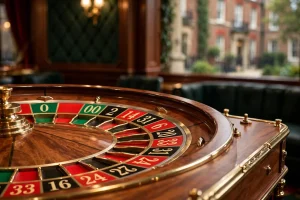
Online American Roulette Casinos in the UK
The 00 pocket distinguishes American Roulette from the single-zero European wheel and changes the odds...

European Roulette at UK Online Casinos: Rules and Odds
A guide to the single-zero wheel, betting options, table formats and how roulette bonus terms...

Online Casino Games for Real Cash in the UK
A practical guide to slot stakes, UK casino rules, bonus terms and the conditions that...

Online Casino Tournaments UK: Free Slot Entry
Tournament access can depend on a ticket or buy-in, while free entry describes only the...

Online casino without ID in the UK: what it means
A short sign-up form does not remove identity checks, which may apply before or during...

Plinko casino UK: licensing, play and payments
The guide distinguishes UKGC-regulated services from offshore platforms and explains what to check across play,...