
Mines Casino Game UK: What the Search Tells You
 Available in GB

A Mines search points to a subject, but it does not confirm a game’s rules, provider, availability or whether a demo reflects real play.
Table of Contents
- What a Mines-Style Casino Search Can—and Cannot—Tell You
- Online Play: The Casino Context Matters
- Free Play, Bonuses and the Conditions Behind Them
- How to Approach Play Without Inventing a Strategy
- Demo Versions: What the Label Does Not Prove
- Choosing a Casino Without a ‘Best’ List
- Real-Money Play and the UK Market Divide
- Winning Claims, Random Outcomes and the House Advantage
- A Simulator Is Not Evidence of a Real-Game Edge
- Sweety Win Games, Slots and Providers
What a Mines-Style Casino Search Can—and Cannot—Tell You
“Mines casino game UK 2026” sounds like a precise description, but it combines several things that are not interchangeable: a game name, a casino setting, a location and a year. The phrase can indicate the subject someone has in mind. By itself, it cannot establish which specific game is meant, what its rules are, or whether it is available from a particular operator.
That distinction matters because familiar wording can create a false sense of certainty. A title may be used consistently for one product, or similar wording may be applied to different products. Without a confirmed identity, details attached to one interpretation should not be treated as facts about every game described as Mines. The name alone is not a rulebook.
I have seen how product labels work in casino material: they make an offer or game easy to recognise, but they do not carry every condition or detail with them. “Mines” is a useful starting point for identifying a subject. It is not, on its own, proof of a provider, format, set of rules or UK availability. Those are separate questions.
When choosing a casino for Mines in the UK, payout timing is one practical detail to consider alongside whether the game suits you. The entries below each have a stated payout speed to help inform your shortlist.
1. Revery Play
Payout speed: 1-3 business days Revery Play lists a payout speed of 1–3 business days.
2. Dieselwin
Payout speed: 1-3 business days Dieselwin lists a payout speed of 1–3 business days.
3. Britsino
Payout speed: 1-3 business days Britsino lists a payout speed of 1–3 business days.
4. SpinFormula
Payout speed: 1-3 business days SpinFormula lists a payout speed of 1–3 business days.
5. Amunbet
Payout speed: 1-3 business days Amunbet lists a payout speed of 1–3 business days.
6. BeOnBet
Payout speed: 1-3 business days BeOnBet lists a payout speed of 1–3 business days.
7. Zombillion
Payout speed: 1-3 business days Zombillion lists a payout speed of 1–3 business days.
8. SlotoSport
Payout speed: 1-3 business days SlotoSport lists a payout speed of 1–3 business days.
9. Jetsetspins
Payout speed: 1-3 business days Jetsetspins lists a payout speed of 1–3 business days.
10. NightWin
Payout speed: 1-3 business days NightWin lists a payout speed of 1–3 business days.
What “casino game” contributes
The casino part of the phrase places the subject in a broad category. Casino games involve staking cash or chips on possible random outcomes, or combinations of outcomes. The label does not tell us how a particular game produces its result, what a player must do, or how a round is settled. Those details depend on the individual game rather than on the word “casino”.
The same caution applies to variations such as “casino Mines” or “Mines-style game”. They may express the same general interest, but word order does not resolve whether the person means a named product, a type of game, or a general resemblance. A descriptive label can be understandable while remaining insufficient to identify one exact product.
That is why a confident-sounding explanation can go wrong quickly. If it describes a particular board, a way to place bets, a cash-out feature or a payout structure, it is making claims about rules. Those claims need to match the actual title in question. The name alone cannot support them. Specificity without identification is guesswork.
What the UK reference contributes
Adding “UK” gives the phrase a market context, not confirmation that a game is offered in Britain. Casino games are available through online casinos where permitted by law, but the phrase itself does not identify an operator or establish that a particular title can be accessed there. A regional label in a product description or discussion can point to an intended audience without settling the question of actual availability.
Monopoly Live Casino UK: Format, Play and Limits · Live Dream Catcher Casino UK: How It Works
The year has a similar limitation. “2026” dates the interest; it does not verify that a game has changed, remained unchanged, or continued to be offered. Product names and listings can persist while the underlying details differ. A date in a heading is not evidence of a current version.
This is a narrow but important boundary. The phrase can tell us that the subject is a Mines-labelled casino game in a UK context. It cannot, on its own, settle the identity of the game, its mechanics or its availability. No hidden certainty appears because the same words are rearranged.
In practice, the reliable starting point is the exact product identification. A title and an operator listing can make the subject more specific; the game’s own rules are needed for claims about how it works. Without that distinction, general statements about casino games can easily be mistaken for instructions about a particular Mines title.
I would treat “Mines casino game” as a signpost, not a specification. It points towards a topic, but leaves the important particulars open. The label can orient the discussion. It cannot do the work of the rules.
Online Play: The Casino Context Matters
“Mines casino game online” can describe a particular game, a category of games, or simply the kind of result someone expects to find. Those meanings are not interchangeable. The online casino is the setting; “Mines” is a name or label attached to a game listing. Seeing the two together does not, by itself, establish who made the game, how it works, or whether it is available at a particular casino.
Online casinos are distribution environments. A game’s presentation and availability may depend on the specific operator and the software supplied for its site.
That distinction matters because online casinos are distribution environments, not a single uniform product. Their catalogues can contain different titles, and a game’s presentation may depend on the operator and the software supplied for its site. A casino page might display a game name and artwork, but those surface details do not settle questions about its rules or the version being offered. The label is a starting point, not a specification.
I have seen how readily those categories blur in promotional copy. “Play online” sounds like a clear description, but it often leaves the practical subject unstated: online where, under which operator, and with what exact game listing? The wording can refer to access through a casino website, an app, or a page that describes the title without offering it. None of those settings should be treated as proof of the others.
A casino is the setting, not the game rules
Casino games are available through online casinos where the law permits them. That tells us something about the route by which casino play can be offered; it does not verify the details of any specific Mines title. General descriptions of casino play cannot safely be converted into instructions for a game whose rules have not been established.
Casino Dice Games in the UK: How Online Play Works · Live Casino UK: Games, Rules and Offers
The same caution applies to familiar interface elements. A page may show a game tile, a launch button, an account menu, or a balance display. These are features of an online service or its presentation. They do not demonstrate that a particular title has a specific layout, round structure, control, or outcome model. An interface can look self-explanatory while leaving important rules elsewhere, or while referring to a different version than the one described on another site.
From the operator’s side, the catalogue is also a commercial arrangement. A title appears within a wider service, with the casino controlling how it is listed and presented. That placement may make the game easier to notice, but prominence is not evidence of quality, fairness, or suitability. “Featured” is a placement decision. Nothing more.
The distinction between a game and its surrounding casino becomes especially important when descriptions are repeated across multiple pages. A short summary may be copied, simplified, or attached to a title with a similar name. At that point, confident wording can create the impression that all versions share the same rules. They may not. A game name alone is too thin a basis for that conclusion.
What online access does—and does not—mean
The phrase “online casino with Mines” can mean that a casino lists a game under that name. It does not establish that every casino carries it, that it is available in every location, or that the listing is current. Availability is specific to the operator and its catalogue. A mention on one site cannot stand in for a check of another.
A visible game tile in a casino catalogue is only a starting point; it does not guarantee that the game is currently available, loadable, or accessible in your location.
Access also has separate layers. A casino may be reachable as a website, while a particular game may fail to load, be unavailable in a given setting, or be represented only by an information page. Those possibilities concern the service and the listing, not the game’s underlying rules. I learned not to treat a visible tile as a completed verification. The tile is only the door.
Nor should the word “online” be taken to mean that play is necessarily identical across devices or presentations. A casino may offer access through different interfaces, but that fact alone does not show that every version behaves in the same way. The responsible description stays narrow: online casinos provide a setting for casino games where permitted by law; claims about a named title need to be tied to that title and its actual presentation.
There is also a commercial context behind the word “casino.” Casino games typically give the casino a predictable advantage over the long term while leaving players the possibility of short-term gains. That general feature helps explain why online casino pages are not neutral catalogues: they present gambling products within a business designed to earn revenue. It does not, however, tell us the precise mathematics or mechanics of a particular Mines game.
So the online setting answers only a limited question. It explains where casino games may be offered and why the surrounding site matters. It does not confirm that a specific Mines game is present, define its rules, or establish what happens during play. Those are distinct claims, and each needs evidence about the actual title rather than assumptions drawn from the casino format.
JetX Casino Game in the UK: What the Label Means · Online American Roulette Casinos in the UK
Free Play, Bonuses and the Conditions Behind Them
“Free” can describe two quite different things in a casino promotion. It may mean that no cash stake is required to take part, or it may mean that bonus funds are added to an account under conditions. Those are not interchangeable. A no-deposit bonus, for instance, is a casino bonus that can be received without spending money. That does not automatically make the funds withdrawable, unrestricted or usable on every game.
I have seen promotional wording do most of its work before the terms are opened. “Free play” sounds like a simple invitation; the actual offer may specify which games qualify, what must happen before winnings can be withdrawn, and when the promotion ends. Those details are the offer. The headline is only the hook.
A search for free Mines-style casino play does not establish that a particular title has a free mode, or that an operator has a promotion for it. Even where bonus funds are available, their permitted use depends on the operator’s offer terms. The important distinction is between trying a game without staking personal cash and wagering promotional funds that come with conditions. One is about the source of the stake; the other is about what the promotion requires in return.
Bonus funds are not cash
A bonus balance can look like ordinary money on an account screen, but the withdrawal rules may treat it differently. Wagering requirements set a total amount of eligible bets that must be placed before bonus funds or related winnings can be cashed out. The requirement is calculated against the bonus amount, so a larger multiplier can create a much larger betting obligation.
Bonus Wagering Calculation
Step 1: Identify the bonus and multiplier
Take a £100 bonus with a 35x wagering requirement.
Step 2: Calculate total stakes
Multiply the bonus by the requirement: £100 × 35 = £3,500.
Step 3: Determine the obligation
£3,500 in total bets must be placed before any bonus funds or related winnings can be cashed out.
The arithmetic is straightforward. A £100 bonus with a 35x wagering requirement calls for £3,500 in total bets before cash-out. A £20 bonus at 10x means £200 in stakes. Neither figure says how much will remain afterward: bets can lose, and completing the required turnover does not guarantee a profit. That is the part promotional banners tend to compress. The obligation is measurable; the outcome is not.
Since 19 January 2026, incentives cannot require more than 10x wagering of bonus funds. A specialist market review describes this cap as applying to gambling incentives. It does not turn a bonus into cash or remove the other terms attached to an offer. Eligibility, qualifying games, contribution rules and withdrawal conditions still matter, and the full terms determine how the offer works in practice.
Read the offer as a set of rules
The label “no deposit” answers one narrow question: whether receiving the bonus requires spending money. It does not settle whether a player must verify an account, meet eligibility conditions, place qualifying bets, or satisfy a withdrawal condition. Nor does it prove that the bonus applies to a Mines-style game. A promotion’s headline and its usable scope are separate things.
I treat an offer as a sequence of conditions, not as a single advertised amount. First comes eligibility: who can claim it and whether the account qualifies. Then comes use: which games and stakes count, and whether bonus funds are excluded from some play. Finally comes withdrawal: what must be completed and whether any limit or expiry condition affects the balance. If one link is missed, the headline can give a misleading impression of the value.
Crash casino games in the UK: formats and licensing · European Roulette at UK Online Casinos: Rules and Odds
The distinction between casino and betting promotions is also material. A single incentive cannot combine different gambling product types, such as casino play and sports betting, as conditions for unlocking a reward. A specialist market review notes this separation as part of the current incentive rules. In practical terms, a casino reward should not depend on placing bets in a different gambling product category.
What “free” does not settle
Promotional language can describe a genuine bonus while still leaving the most consequential details in the terms. “Free” does not mean no conditions; “cash” in a bonus label does not necessarily mean immediately withdrawable cash; and a game appearing in an advert does not establish that every promotion can be used on it. These are separate claims.
That matters for a Mines game review or rules search too. Promotion terms cannot tell anyone how a particular title works, whether it offers a free mode, or whether bonus funds are accepted on it. Those are game-specific questions. The safe reading is narrower: a casino may offer funds without requiring an initial spend, but any use and withdrawal remain governed by the promotion’s terms.
In my experience, the key decision is not whether the headline sounds generous. It is whether the conditions are clear enough to calculate the commitment and understand the limits. If the wagering requirement is present, translate it into total stakes. If game eligibility is unclear, do not assume the named title qualifies. And if the offer is presented as effortless, read the small print before treating it as spendable value.
Do
- Translate wagering requirements into total stakes
- Verify if the named title is eligible for the offer
- Read the full terms and conditions
Don’t
- Assume “free” means no conditions apply
- Treat a bonus label as immediately withdrawable cash
- Rely on promotional slogans over the small print
A bonus is a contract in miniature. Read the terms, not the slogan.
How to Approach Play Without Inventing a Strategy
Searching for a way to play Mines can bring together several different questions: what the rules are, whether a particular version suits a player, and whether a repeatable decision can improve the result. Those questions should not be collapsed into a single “strategy”. Advice only has value when it matches the exact game and its rules. A familiar name is not enough to establish that two versions work alike.
I treat strategy claims as claims about a specific product, not as general truths about a game label. Before any decision-making advice can be assessed, the rules need to explain what the player chooses, what triggers an outcome, when a round ends, and how any return is calculated. If those details are unclear, a tip based on them is guesswork. It may sound precise while quietly assuming rules that are not in front of the player.
That distinction matters because casino games are not all built around the same kind of decision. Some involve choices against the casino; others use random outcomes generated by a computer or other gaming equipment. Knowing that a game belongs to a broad category does not reveal the details of a particular title. Nor does a confident explanation from a video or forum establish that its author is discussing the same version.
Aviator Casino Game UK: Licensing and Play
What a useful tip would need to establish
A practical tip should say what it relies on. If the advice depends on a rule, that rule should be visible in the game’s own information. If it depends on a mathematical property, the calculation and the assumptions behind it should be clear. If it is only a player’s account of what happened in a session, it is an anecdote—not evidence that the same choice will produce the same result next time.
This is where phrases such as “safe strategy” or “best pattern” do more work than they deserve. They frame a choice as protective or superior before showing why. I have seen that kind of wording make ordinary variance look like a method: a run of favourable results is presented as proof, while losing runs are left out of the story. The presentation is tidy. The evidence is not.
A claimed pattern also needs to distinguish between a genuine rule and a sequence noticed after the event. In random number games, selected random numbers are generated by a computer or other gaming equipment. A sequence that appears meaningful to a player does not, by itself, show that the next result can be inferred from earlier ones. Repeated observation may reveal how a published feature works, but it should not be mistaken for control over random outcomes.
Separate rule knowledge from prediction
Understanding rules can prevent avoidable misunderstandings. It can clarify what an action means, how a round is settled, or which conditions apply to a particular choice. That is useful, but it is not the same as finding a way to beat the game. Rule knowledge describes the system; prediction claims to know what will happen within it.
Avoid treating a sequence of successful examples as a "strategy". In random number games, past outcomes do not provide a dependable signal for future results.
The distinction is easy to lose when a guide gives a sequence of actions. A sequence can be easy to follow without being supported. The relevant test is whether its reasoning follows from confirmed rules, rather than from a handful of successful examples or a promise that a certain rhythm will keep working. Without that link, “strategy” is a label, not an explanation.
For Mines-style play, any advice that depends on specific selection, reveal, stopping or payout mechanics needs to match the version being discussed. I would not transfer instructions from one title to another just because both use the Mines name. Nor would I treat a description of possible controls as confirmation that every version has those controls. Small differences in rules can make an otherwise plausible tip irrelevant.
Make decisions without treating them as an edge
A player can still make deliberate choices without claiming to have found a winning system. That means deciding in advance what level of risk feels acceptable, keeping play within that boundary, and stopping when the decision no longer feels controlled. These are limits on exposure, not methods for changing the game’s outcome.
A fixed routine can help with discipline, but it cannot turn an unsupported pattern into an advantage. Increasing or reducing a stake after a win or loss may change how much is at risk; it does not establish that the next result is more predictable. The same goes for copying another player’s sequence. A record of someone else’s choices cannot guarantee the same outcome in a separate session.
Chicken Road Game in UK Casinos: What’s Known
The commercial description of a game may emphasise choice because choice makes the experience feel active. That does not mean every choice creates an edge. Casino games generally offer the possibility of short-term gains while retaining a predictable long-term advantage for the casino. That is the uncomfortable part. A clever-sounding routine does not remove it.
When a Mines tip explains the exact rule it relies on, it can be assessed against that rule. When it promises a pattern, guaranteed recovery, or a dependable route to profit without showing a sound basis, caution is the rational response. I would rather leave a tactic unclaimed than dress uncertainty up as expertise.
Demo Versions: What the Label Does Not Prove
A request for a Mines casino demo can mean several different things: a playable preview, a practice mode inside a casino, or simply a page using “demo” as a search-friendly label. Those are not interchangeable. The word alone does not establish that a particular Mines-style title exists, that it can be opened without an account, or that it offers a no-cost version.
Casino games are available through online casinos where permitted by law. That general fact does not confirm that any specific game is offered in demo form, or that a particular site provides access to it. I learned to separate the presence of a familiar label from the thing it appears to promise. A heading is not a feature.
A demo mode is a limited way to inspect a product’s presentation; it does not prove that the real-money version behaves identically or shares the same rules.
Even when a game has a demo mode, the label says little about what the mode contains. It might allow interaction with a game interface, or it might be a static preview. Without details from the provider or operator, there is no sound basis for assuming what controls are available, whether a session can be saved, or how long access lasts. The practical question is what can actually be done in that version, not whether the word “demo” appears on a page.
A demo also does not, by itself, establish that its presentation matches a real-money version. The same title could be displayed in different settings, and a name or visual design would not settle whether rules, settings or outcomes are identical. That distinction matters because a preview can help show how a product is presented while telling very little about how another version behaves. A resemblance is not proof.
The label is especially weak evidence when it appears in promotional copy without a clear explanation of the mode. A page may describe a game as available to try, yet leave unclear whether this means a dedicated demo, a promotional offer, or some other access arrangement. Those details should be stated plainly by the operator. If they are not, the claim remains vague.
I would treat a demo as a limited way to inspect a presented product, not as confirmation of its rules, availability or real-money behaviour. That keeps the value of a preview in proportion: it may show what is on screen, but it cannot answer every question about the game behind it. Useful, within limits.
Online Casino Tournaments UK: Free Slot Entry
The same caution applies to labels such as “free” or “practice”. They can describe different arrangements, and they do not automatically mean the same thing as a demo. A demo is best understood by its stated function and terms, rather than inferred from a short label. Clear wording matters.
For a UK audience, the relevant distinction is still whether the casino game is being made available in an online casino where that is permitted. A demo label does not settle that question either. Nor does it establish that access is available to every visitor. The mode, the operator and the setting are separate details; none should be inferred from the name alone.
In short, “demo” is a description to verify, not a guarantee. It may indicate a preview, but the word cannot prove what version is offered or what that version represents.
Choosing a Casino Without a ‘Best’ List
A “best” label looks decisive, but it only means something when the comparison uses the same criteria for each casino. For a Mines-style title, that would require reliable, comparable details about the particular game and its availability at each operator. Without those, a ranking would turn an impression into a recommendation. I would not treat a casino as the best choice simply because a page places it at the top.
The UK market is often described as having two parallel parts: casinos operating within the UKGC framework and offshore platforms outside it. That description appears in a specialist review, but it is a snapshot, not a permanent market map. Offshore casinos do accept players from the UK; accepting them does not put those platforms inside the UKGC system. The distinction matters more than the label attached to a game.
Regulatory Status
Operators taking bets from British residents must hold a UKGC licence regardless of where the operator is based.
The legal framework is the firmer point. The Gambling (Licensing and Advertising) Act 2014 made a UK licence necessary for an operator taking bets from British residents. That requirement applies regardless of where the operator is based. A platform’s own description, or the fact that it accepts UK customers, is not a substitute for knowing which regulatory space it belongs to.
This is where comparison pages can blur unlike things. One may present a game catalogue, another an operator’s promotional claims, and another a licence status. Those details answer different questions; combining them into a single score does not make the underlying evidence comparable. Nor does a high position establish that the casino offers the specific Mines-style title someone has in mind.
I have seen “best” used as though it were a measured result. Often it is a judgement built from selected criteria, and the selection itself does much of the work. A responsible comparison would make those criteria explicit and separate UKGC-regulated operators from offshore sites, rather than treating them as interchangeable options. Without that separation, the headline can conceal the most important difference.
So a definitive best-casino ranking for this game would overstate what can be established. The more useful distinction is not first place versus second place, but UKGC-regulated status versus operation outside that framework. No ranking can replace that distinction.
Real-Money Play and the UK Market Divide
A request to play a Mines-style casino game for cash sits inside a wider regulatory distinction. In 2026, one specialist casino review describes the online market as having two parallel parts: UKGC-licensed operators and offshore platforms outside that system. That is a source’s characterisation of a changing market, not a permanent map of every platform or game.
Online Casino Games for Real Cash in the UK
The legal line is more definite. An operator taking real-money gambling from customers in England, Scotland or Wales must hold a licence from the UK Gambling Commission, known as the UKGC. A platform based abroad is not exempt from that requirement simply because its business is located elsewhere. Offshore casinos may accept UK players while operating beyond UKGC oversight; their accessibility does not make them UK-licensed.
That distinction matters more than a game label. “Real-money” describes the stake, not the regulatory standing of the casino offering it. From the industry side, I have seen those ideas blurred in promotional language: a site may present itself as open to British customers, while its location and its permission to serve those customers are separate questions. Access is not approval.
For a Mines game, the same principle applies. The name alone cannot establish whether a particular title is offered by a UKGC-licensed operator, or whether a platform operates under the UKGC’s rules. The relevant question is the status of the operator accepting the stake. If that operator serves customers in Great Britain for real-money gambling, the licensing requirement applies.
Market Divide
The structural difference between UKGC-licensed operators and offshore platforms is more significant than any specific game label.
The UKGC framework and the offshore market can therefore appear side by side to someone looking for casino play, but they are not equivalent regulatory environments. One is subject to the UK licence requirement; the other operates outside that system. The difference is structural, not cosmetic. A familiar game name does not erase it.
Winning Claims, Random Outcomes and the House Advantage
A Mines-style game name does not, by itself, explain how a particular title generates results. The relevant distinction is between a general casino principle and a claim about one game’s rules. In random-number games, selected numbers are produced by a computer or other gaming equipment. That describes a broad mechanism, not the exact way a named Mines title may arrange or reveal outcomes.
This matters when a game is presented as though each result follows a pattern that can be read in advance. Past outcomes do not, on their own, establish what the next result will be. A run of apparent successes or failures can feel significant, but it is not proof that a player has identified a dependable signal. From the other side of the counter, I have seen how easily a confident explanation can turn uncertainty into a sales pitch. Confidence is not evidence.
Can a player win? Casino games can produce short-term gains for players. That possibility is part of the product, not proof that a particular method can reliably secure them. Over the long term, casino games typically give the operator a predictable advantage. The house advantage is a statistical feature of the game, not a promise that the casino wins every round or that a player cannot leave ahead after a session.
The size and expression of that advantage depend on the rules and mathematics of the specific game. Without those details, assigning a percentage or describing the odds of a Mines outcome would be guesswork. A label, promotional claim or anecdotal winning story cannot fill that gap.
Crazy Time Live Casino Game Show in the UK
I learned to separate “winnable” from “beatable”. The first means a gain can occur; the second implies a repeatable edge over the game. Random outcomes and a long-term house advantage give no basis for promising that edge. Any explanation of a specific title’s workings needs to be grounded in its actual rules, rather than borrowed from another game with a similar name. Short-term wins remain possible. Certainty does not.
A Simulator Is Not Evidence of a Real-Game Edge
A simulator can model a set of rules and generate outcomes from assumptions built into its code. That makes it a way to explore a model, not proof that a particular Mines-style game follows those rules or that the model predicts what will happen in a live game. I have seen polished outputs mistaken for evidence. Presentation is not validation.
For games based on random numbers, outcomes are selected by a computer or other gaming equipment. A simulator can imitate a process only to the extent that its assumptions match the real one. If the game’s rules, outcome generation and payout structure have not been established, results from a model say something about the model—not necessarily the casino game.
Online Bingo in the UK: Formats, Tickets and Slots
The distinction matters when a simulation appears to show a repeatable pattern or a route to better results. Even a model that reproduces its own assumptions consistently cannot establish that a player has an edge in real play. Casino games generally give the operator a predictable advantage over the long run, while still allowing short-term wins. A simulated winning run does not remove that underlying structure.
“Predictive” is doing a lot of work. It may mean that software produces plausible-looking rounds, rather than that it can forecast future outcomes. Those are different claims. The label alone does not settle which one is being made.
Any claim of predictive power needs evidence about the game and the simulator, not just screenshots or a run of favourable results.
A model is not an edge.
Sweety Win Games, Slots and Providers

Sweety Win Live Casino: Tables and Providers
Sweety Win UK Guide Live dealer games Sweety Win has a distinct live casino section...

Aviator Casino Game UK: Licensing and Play
The guide separates UKGC-regulated operators from offshore sites and explains Aviator’s crash-game format, offers, payments...

3-Reel Slots in the UK: How Online Play Works
A guide to three-reel slot mechanics, real-money stakes, free play and the licensing rules for...

Five-Reel Slots in the UK: How the Format Works
The guide separates a five-column layout from outcomes and explains what demo spins and bonus...

Bonus Buy Slots in the UK: Demo Play Guide
Demo mode lets you inspect a slot’s controls and bonus sequence, while keeping fictional credits...

Fast Payout Online Casino UK: What Keno Shows
Learn how selected spots and catches shape keno results, and why a quick round or...

First Deposit Bonus Casinos in the UK: What to Check
A promotion’s value depends on eligibility, trigger conditions, bonus use and restrictions—not the headline alone....

High-Volatility Slots in the UK: How They Work
Volatility describes the pattern of wins, not a prediction of what any individual play will...

Online Keno Casinos in the UK: Games and Odds
Keno uses a numbered 1–80 card and a separate random draw, while rules, payouts and...

Live Casino UK: Games, Rules and Offers
Live casino combines a human dealer and streamed table action with on-screen controls, while rules...

Low-Volatility Slots in the UK: What to Know
Low volatility describes a tendency towards more frequent, smaller wins—not a promise of steady returns...

Online Slot Payout Percentage: What RTP Means
RTP describes the share of stakes a slot is designed to return over many plays,...

Best RTP Casino Slots UK: Understanding RTP
RTP describes an aggregate long-run pattern, while volatility affects how results can vary from one...

High RTP Slots in the UK: What RTP Can Tell You
RTP describes a game’s long-run theoretical return, while volatility and individual sessions shape very different...

Video Slots in the UK: Reels, Features and Play
From reel layouts and feature rounds to stake limits and casino checks, this guide explains...

Casino Dice Games in the UK: How Online Play Works
The guide separates physical rolls from computer-generated outcomes and places dice formats in the wider...

Chicken Road Game in UK Casinos: What’s Known
The name alone cannot confirm how the game works, whether it is available in the...

Crash casino games in the UK: formats and licensing
Crash games can resemble casino slots, but operator licensing and payment routes change the context....

Crazy Time Live Casino Game Show in the UK
Crazy Time pairs a real-time studio presentation with digital betting controls, while casino terms and...

Deal or No Deal Casino UK: Game and Bonus Guide
A clear look at how the online format relates to the television game, and which...

Fastest Payout Online Casinos in the UK
Payout speed depends on which stage is measured; casino claims may omit the payment method,...

French Roulette Online Casinos in the UK: Rules & Odds
See how the zero, table format, minimum stakes and bonus terms shape the cost and...

Hi-Lo Casino UK: Rules, Card Values and Play
Rules for ties, used cards and reference cards can vary, changing how each higher-or-lower decision...

JetX Casino Game in the UK: What the Label Means
The overview distinguishes marketing language from documented rules and puts demo play, offers and real-money...

Live Baccarat Online Casino UK: How It Works
See how live-dealer baccarat works within a wider casino, from hand decisions and table costs...

Live Blackjack Online in the UK: How Tables Work
A practical look at the dealer stream, table controls, rules, side bets and the limits...

Live Casino Lightning Roulette in the UK: How It Works
A practical look at live-table mechanics, roulette odds, offers and the checks that distinguish a...

Live Dream Catcher Casino UK: How It Works
A practical guide to the dealer-led stream, player interface and limits of claims about a...

Live Roulette UK with English-Speaking Dealers
A practical guide to dealer-led roulette, table formats, betting controls and the limits of claims...

Monopoly Live Casino UK: Format, Play and Limits
The guide separates the live-studio presentation from game rules, and explains what comparisons, stats, demo...

Online Bingo in the UK: Formats, Tickets and Slots
See how ticket formats shape bingo rounds, and how ticket limits, bonus conditions and slots...
Online American Roulette Casinos in the UK
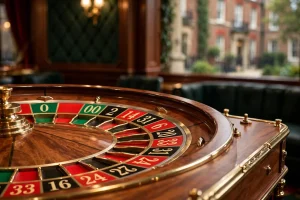
The 00 pocket distinguishes American Roulette from the single-zero European wheel and changes the odds...

European Roulette at UK Online Casinos: Rules and Odds
A guide to the single-zero wheel, betting options, table formats and how roulette bonus terms...

Online Casino Games for Real Cash in the UK
A practical guide to slot stakes, UK casino rules, bonus terms and the conditions that...

Online Casino Tournaments UK: Free Slot Entry
Tournament access can depend on a ticket or buy-in, while free entry describes only the...

Online casino without ID in the UK: what it means
A short sign-up form does not remove identity checks, which may apply before or during...

Plinko casino UK: licensing, play and payments
The guide distinguishes UKGC-regulated services from offshore platforms and explains what to check across play,...