
Chicken Road Game in UK Casinos: What’s Known
 Available in GB

The name alone cannot confirm how the game works, whether it is available in the UK, or what its demo and reward claims mean.
Table of Contents
- What “slot” means here—and what the available facts do not establish
- Playing online: availability depends on the market
- “Rewards” are terms, not free value
- Chicken Road casino searches and the UK licensing divide
- A demo version: what cannot be confirmed
- “Free” play and reviews: separate evidence from promotion
- Playing on a phone and paying: keep the claims narrow
- Chicken Road 2: a separate query, not a verified sequel
- The crossing-game wording does not prove the mechanics
- Casinos with Chicken Road: availability remains unverified
- Sweety Win Games, Slots and Providers
What “slot” means here—and what the available facts do not establish
The word “slot” can make a casino search sound more specific than it is. It may be used as a label for a casino game, but the label alone does not tell us how a particular title works. Calling something a Chicken Road slot, for instance, does not establish that it uses a slot-machine format, or even that it is a casino game. The name and the format are separate things.
That distinction matters because casino games are not all built around the same kind of play. In general, they involve staking cash or chips on a possible outcome, or on a combination of outcomes. The result may be determined in different ways depending on the game. A familiar name or visual theme is not enough to identify those rules.
I learned to treat game labels as the start of a description, not the description itself. In the industry, categories help organise products and set expectations. But they are not a substitute for the actual game information: how a round proceeds, what the player can stake on, and how an outcome is decided. Without those details, applying a precise format to a title is guesswork.
Choosing a chicken road game casino in the UK means considering more than the game itself. This reference card highlights the payout-speed information available for each operator.
1. Revery Play
Payout speed: 1-3 business days Revery Play lists a payout speed of 1–3 business days.
2. Dieselwin
Payout speed: 1-3 business days Dieselwin lists a payout speed of 1–3 business days.
3. Britsino
Payout speed: 1-3 business days Britsino lists a payout speed of 1–3 business days.
4. SpinFormula
Payout speed: 1-3 business days SpinFormula lists a payout speed of 1–3 business days.
5. Amunbet
Payout speed: 1-3 business days Amunbet lists a payout speed of 1–3 business days.
6. BeOnBet
Payout speed: 1-3 business days BeOnBet lists a payout speed of 1–3 business days.
7. Zombillion
Payout speed: 1-3 business days Zombillion lists a payout speed of 1–3 business days.
8. SlotoSport
Payout speed: 1-3 business days SlotoSport lists a payout speed of 1–3 business days.
9. Jetsetspins
Payout speed: 1-3 business days Jetsetspins lists a payout speed of 1–3 business days.
10. NightWin
Payout speed: 1-3 business days NightWin lists a payout speed of 1–3 business days.
What random-number games do
One established way casino outcomes are produced is through a random-number game. A computer or other gaming equipment generates selected random numbers, which determine an outcome under the game’s rules. The equipment produces the numbers; the rules give them meaning within the game.
That broad description does not identify a specific title. Random-number games can be organised around different kinds of choices and outcomes. Knowing that a game uses random numbers would not, by itself, reveal what is shown on screen, what the player does during a round, or how a win is calculated. Those are properties of the particular game, not of the phrase “random-number game”.
The same care applies to “slot machine”. In ordinary casino language, the phrase suggests a recognisable category. But a title being described with the word “slot” is not proof of its underlying format. A category name can be useful when it accurately matches the product; it can also be used loosely in descriptions and headlines. The product’s actual rules settle the matter.
No particular mechanics should be read into the Chicken Road name. The word “slot” in a description does not confirm reels, symbols, paylines, bonus rounds, or any other feature. Those details would need to come from the game itself or a reliable description of its rules. Otherwise, the language is doing more work than the evidence can support.
The commercial shape of casino games
There is another general point worth keeping separate from format. Casino games typically give the casino a predictable advantage over the long term, while still allowing the possibility of short-term gains for a player. These two things can coexist: an individual result may go either way, while the game’s longer-run design favours the house.
Casino Dice Games in the UK: How Online Play Works · Online American Roulette Casinos in the UK
That is not a prediction about any one session, nor does it tell us the outcome of a particular game. It describes the commercial structure common to casino games. The distinction between a single result and the long-term advantage is basic, but it is often blurred by promotional language that foregrounds the chance of a win and leaves the underlying economics in the background.
A game’s format and its commercial structure are different questions. The first concerns what kind of game it is and how a round works. The second concerns how the game is arranged over repeated play. A title could not be classified from its name alone, and a general description of casino economics cannot fill in that missing classification.
I have seen this confusion arise whenever a familiar category word is attached to an unfamiliar title. The word creates a ready-made picture in the mind; the actual product may or may not match it. In a casino context, that gap matters. Players stake money or chips on outcomes, so an assumed rule can change how the whole offer appears.
A careful description starts with what the game’s rules say, rather than with what its title seems to imply. If the rules identify a random-number process, that can be described as such. If they establish a slot format, that can be named. Until then, “slot” is just a label—not a mechanics manual.
Attention: A category label like "slot" does not confirm the actual mechanics, rules, or features of a game; these must be verified through the game’s own rules.
That is the useful starting point for the Chicken Road wording. It can be discussed as a casino-related search phrase, but the phrase itself does not establish whether the title is a slot, how it plays, or how its outcomes are produced. The general mechanics of casino and random-number games explain the vocabulary; they do not turn an unconfirmed label into a confirmed game format.
Words are not rules.
Playing online: availability depends on the market
“Online” describes where a casino game is offered, not proof that a particular title can be opened or played there. Casino games can be available through online casinos where local law permits them. That condition matters: the existence of an online casino does not establish that every game is offered through it, or that a particular game is accessible in every country.
The distinction is easy to lose when a title is described as an online casino game. The wording can sound like a statement about a confirmed product, but it may only express what someone hopes to find: a game with that name, available through an internet-based casino. A search for Chicken Road online therefore does not, by itself, establish that a Chicken Road title is hosted by a casino or playable in a given market.
I have seen the same gap between the language of a product category and the practical question behind it. “Available online” can refer to a broad way of supplying casino games, while the decision that matters is narrower: whether the specific game is actually included in the offering that is accessible under the relevant rules. Those are separate claims. One does not prove the other.
Mines Casino Game UK: What the Search Tells You · European Roulette at UK Online Casinos: Rules and Odds
A careful description keeps them apart. Casino games may be offered online where permitted by law; whether a named game is among them is a separate matter. The distinction is not a technicality. A game title appearing in a page heading, a promotional phrase, or a category label cannot establish its availability. Nor does the general presence of casino games online settle whether a particular version is offered.
The word “game” does not resolve the question either. It can refer to a casino product, but the label alone does not show how the product is classified, how it works, or where it can be accessed. Treating the wording as confirmation would turn an assumption into a product claim. That is precisely where otherwise clear descriptions become misleading.
There is also a difference between a game being described online and being available to play online. A page may discuss a title without offering it. A casino may offer games online without carrying every title that appears in articles or searches. The general fact that casino games can be supplied through online casinos does not bridge that gap. It establishes a possibility in permitted markets, not a listing for Chicken Road.
This is why statements about access need a defined scope. “Casino games are available online” is a broad statement about the channel. “This game is available online” is a specific statement about a named title. “This game is available in a particular market” narrows the claim further. Each step requires its own support. Without that distinction, broad industry language can be mistaken for confirmation of an individual game.
Availability is a relationship between a game, an online casino, and a market in which the offering is permitted by law.
The same caution applies to wording that joins a title to “casino” or “online.” Those words may describe the kind of result being sought, but they do not function as evidence that a casino has the game in its catalogue. A title can be discussed in an online setting without being playable there. A listing, where one exists, would need to establish the connection between the actual game and the casino offering, rather than merely repeat the name.
From the operational side, that precision is useful because availability is not a property of a phrase. It is a relationship between a game, an online casino, and a market in which the offering is permitted. Remove any one of those parts and the statement becomes less informative. A general explanation of online casino games should not be read as a promise about a specific title.
For Chicken Road, the sensible reading of “online casino” is therefore a request about possible access, not confirmation of access. Casino games can be offered online where permitted by law; the wording attached to a game name cannot establish that the game itself is available. It is a narrow distinction, but an important one.
Possibility, not proof.
“Rewards” are terms, not free value
A casino promotion is not cash simply because its headline uses the word “reward”. The label describes an offer; the terms determine what it can be used for, what must happen before funds become withdrawable, and whether any restrictions apply. That distinction matters when a promotion is associated with a game name: a search for a Chicken Road reward does not establish that such an offer exists or that a particular game qualifies for one.
Aviator Casino Game UK: Licensing and Play
A no-deposit bonus, in the literal sense, is a casino bonus that can be received without spending money. “No deposit” describes how the bonus is obtained, not whether it is unrestricted or equivalent to withdrawable cash. The conditions still govern its use. Reading only the headline leaves out the mechanics that decide what the offer is worth in practice.
Wagering requirements are one of those mechanics. They specify how much qualifying play is required in relation to bonus funds before a withdrawal may be made. A specialist review describing the incentive rules states that, from 19 January 2026, the requirement cannot exceed 10x wagering of bonus funds. That cap is a limit on the requirement, not a promise that the bonus will produce a return, nor a statement that every offer uses the maximum. The terms still need to make clear how the requirement is calculated and what activity counts.
The difference between a headline and a condition is easy to miss. A promotion can appear generous while its restrictions determine how much of the bonus can actually be used, which games contribute, and when a balance can be withdrawn. “Bonus funds” is not the same thing as cash in an ordinary account. The wording matters.
Product restrictions matter too. A specialist review of the incentive rules states that one offer cannot combine different gambling product types, such as casino play and betting, as conditions for unlocking a reward. In practical terms, an incentive should not make casino participation dependent on also placing bets on another gambling product. That is separate from a game-specific restriction: the rule concerns the types of gambling bundled into an offer, not whether a named game is included.
Do
- Check the wagering requirements
- Identify eligible products and games
- Verify withdrawal conditions
- Distinguish bonus funds from cash
Don’t
- Assume a reward is free cash
- Trust promotional headlines alone
- Ignore the small print of offers
- Confuse bonus labels with value
For a promotion presented alongside a crash-style game or a road-crossing theme, the same separation is useful. The presence of a reward banner would not, by itself, show whether a game is eligible, what activity qualifies, or how a bonus balance is treated. Nor does the word “tournament” explain whether entry is free, whether prizes are bonus funds, or what conditions would apply. Those details belong in the offer terms, not in the promotional label.
I have seen the same commercial distinction from the operator side: a headline attracts attention, while the conditions define the transaction. That is not automatically evidence of an unfair offer; it is a reason to treat the headline as incomplete. The key points are the wagering requirement, eligible products and games, any withdrawal conditions, and the distinction between bonus funds and cash. Clear terms should state these plainly rather than leaving their meaning to implication.
A casino incentive should therefore be assessed as a set of conditions, not as free value. The UK rule described above places a ceiling on wagering requirements and prevents mixed-product incentives, but it does not certify a particular promotion or prove that Chicken Road has one. No offer assumed.
Chicken Road casino searches and the UK licensing divide
A name appearing beside “casino” does not settle the question that matters in Britain: whether the operator offering real-money play is authorised to serve the market. The game title and the operator’s legal status are separate matters. A site may describe itself as a UK casino, accept British customers or display a game catalogue; none of those details, on its own, establishes that it holds the required UK licence.
JetX Casino Game in the UK: What the Label Means
A specialist review characterises the 2026 online casino landscape as two parallel spaces: UKGC-regulated operators and offshore platforms outside that system. That description is useful only if the distinction is kept sharp. Offshore casinos may accept UK players, but acceptance is not the same as authorisation. Nor does a game’s presence on an offshore site make that site part of the regulated British market.
What the licence distinction means
The Gambling (Licensing and Advertising) Act 2014 established the requirement for operators taking bets from British residents to hold a licence. For real-money gambling offered to customers in England, Scotland and Wales, the relevant regulator is the UK Gambling Commission, or UKGC. The requirement concerns the operator and its service, not the wording used to describe a particular game.
That is why “UK-facing” can be an ambiguous label. A platform may be reachable from Britain and may accept British customers while operating outside the UKGC system. In industry language, such sites are often called non GamStop sites, but the label does not tell the whole story about a particular operator’s licence. The practical distinction is whether the operator holds the authorisation required to serve the British market.
The legal position is not changed by a platform’s registration elsewhere. A foreign licence and a UKGC licence are not interchangeable permissions. Where an operator serves customers in Great Britain with real-money gambling, the UKGC requirement applies regardless of where the company is based. Different claims about a site’s licence therefore need to be read as claims about different regulatory systems, not as alternative names for the same approval.
Licensing Risk
Operating without a UKGC licence while serving British residents is a violation of the Gambling (Licensing and Advertising) Act 2014.
Why the game name cannot answer it
A search for a Chicken Road casino in the UK can bring together two questions that should be checked separately: whether a particular operator is licensed for the British market, and whether it offers the named game. A title in a menu or promotional banner does not answer the licensing question. Equally, a UKGC licence would establish the operator’s regulatory status, not prove that it carries Chicken Road.
I have seen how easily the two checks get blurred in casino marketing. “Available to UK players” sounds like a statement about access; it may say nothing about the authorisation needed to offer real-money gambling here. “Licensed” is also incomplete unless the regulator and the scope of the licence are clear. The distinction is plain. Access is not authorisation.
For a UK casino game, the UKGC status of the operator is the central market test. An offshore platform accepting British customers remains outside that regulatory framework; its accessibility should not be mistaken for UK licensing. And the game name itself cannot bridge the gap. A Chicken Road listing, if encountered, would still need to be considered separately from the operator’s status and the rules governing real-money gambling in Britain.
A demo version: what cannot be confirmed
“Demo” sounds like a clear product feature, but the label alone says little. It can describe a playable sample, a practice mode, or simply promotional wording. Those are not interchangeable. For Chicken Road, the existence of a demo and the way it might operate remain unestablished; the title does not settle either point.
Crazy Time Live Casino Game Show in the UK
That distinction matters because a demo is not just a different button on a game screen. A genuine sample would need to be tied to an identifiable game and have some defined way of playing. Without those details, claims about practice rounds, virtual credits, access limits or whether progress carries over would be guesswork. I have seen promotional language do a lot of work while leaving the actual conditions in the small print. The label is not the mechanism.
The same care applies to names such as “Chicken Road casino game demo” or “Chicken Road 2 demo”. A phrase can make a product sound settled before its format or relationship to any other version has been established. “Demo” does not prove that a playable version exists, and adding “2” does not establish a separate release. Those are separate claims, not details that can be inferred from a name.
A demo should also not be confused with real-money play. In casino games generally, players stake cash or chips on possible random outcomes; a practice mode, if one exists, would be a different proposition. But that general distinction does not establish that Chicken Road has either mode. Nor does a page describing a game, or using a demo label, by itself explain what happens during play.
The practical test is specificity. A credible description would identify what is being demonstrated, how the mode starts, what value is used for play, and whether any restrictions apply. If those points are absent, the word “demo” cannot carry them by implication. No working rules should be assumed from the label alone.
What defines a credible demo?
A credible description must identify what is being demonstrated, how the mode starts, what value is used for play, and whether any restrictions apply.
That is the narrow conclusion: a Chicken Road demo should not be treated as an established feature, and no particular demo experience can responsibly be described. Real-money availability is a separate question, not something a demo label answers. A product name is not a set of terms.
“Free” play and reviews: separate evidence from promotion
“Free” sounds like a simple description, but in casino marketing it can refer to different things: access without a deposit, a promotional credit, or a play mode that does not involve cash. Those are not interchangeable. A label on a page does not, by itself, establish which arrangement is being offered, whether it applies to Chicken Road, or what conditions sit behind it.
I have seen how a clean headline can leave the important distinction below the fold. The practical test is the wording attached to the offer: what is provided, whether a payment is required, and whether any conditions apply before winnings can be withdrawn. Without specific terms tied to a real offer, “free” is promotion, not a usable description of value.
The same caution applies to claims that Chicken Road can be played for free. A general statement about casino games does not confirm a free option for a particular title. Nor does a page using the game’s name establish that it is an official version or that the described experience is available. Promotional language is easy to repeat; substantiation is the harder part.
Reviews have a different problem. A page labelled a review may be an independent assessment, an affiliate comparison, or promotional copy written to send visitors elsewhere. The label alone says little about the reviewer’s method. Useful scrutiny looks for a clear basis for claims, separation between observed features and sales language, and disclosure of commercial relationships. Strong adjectives are not evidence.
Online Keno Casinos in the UK: Games and Odds
For a game-specific review, the claims should be about identifiable features of the actual game: how it works, what it offers, and where those details were checked. If a review moves from describing a title to declaring it “the best” or “a must-play” without showing its basis, that is an endorsement, not a measured finding. The distinction matters even when several pages repeat the same wording; repetition can make a claim look established without adding independent support.
A review of Chicken Road 2 should be treated with the same care, but its existence would not establish anything about the original or prove a relationship between the two. That is a separate identification question.
So the sensible reading of free-play claims and review pages is narrow: assess the terms and evidence actually presented, rather than treating a headline, a rating, or repeated praise as confirmation. Promotional gloss is not proof.
Playing on a phone and paying: keep the claims narrow
A phone-shaped search result can make a casino game look like an app, but the wording alone says nothing about whether a native Chicken Road app exists. Nor does it establish that a particular version runs in a mobile browser. Those are separate product details, not consequences of the game’s name.
I have seen the distinction blurred in casino copy: “mobile” may describe a site that adjusts to a smaller screen, an app, or simply a page that can be opened on a phone. The label is doing promotional work until the actual access route is clear. An app name, publisher and download destination need to match the operator’s own information; an unfamiliar download link is not proof of an official product.
Attention: A mobile-friendly interface or the presence of a payment logo does not guarantee that a specific game is available or that a specific payment method is supported for a particular account.
The same restraint applies to payment searches. A request to pay by PayPal, for instance, is not evidence that a casino accepts it, or that it can be used for a particular game. Payment availability belongs to the operator and account, while game access is a separate question. A cashier logo and a game listing answer different things.
There has been a real change in the plumbing. Open banking rails and Faster Payments have reduced friction when moving money to and from online casinos. That describes the transfer process across the sector; it does not promise that every operator supports either route, that a transfer will be instant, or that a named game has a particular payment option. No compatibility follows automatically.
From inside the business, the useful distinction is between a payment rail and a product claim. Faster movement of funds does not make a game available on a phone, and a mobile interface does not establish a supported deposit method. “Easy payments” compresses several decisions into one phrase: which operator, which method, and whether the method is available for that account.
So a phone and a payment method should be treated as independent checks, not bundled into a claim that Chicken Road can be played through a specific app or funded with a particular service. The technology can reduce transfer friction. It cannot fill in missing product details. A narrower claim is the honest one.
Hi-Lo Casino UK: Rules, Card Values and Play
Chicken Road 2: a separate query, not a verified sequel
The “2” in Chicken Road 2 looks like a version marker, but a title alone cannot establish that a sequel exists. It might refer to a distinct release, a variation, a listing label, or simply wording used by a third party. Those possibilities are not interchangeable, and the name does not settle which one applies.
I have seen how easily a numeral can acquire authority in casino listings. Once a title appears with a number, it can be repeated across pages as though it confirms a sequel. Repetition is not confirmation. A meaningful distinction would need support from the game’s publisher or another reliable record identifying the release and explaining how it relates to the original. Without that, claims about new features, changed rules, or a different provider are guesswork.
The same caution applies to the phrase “Chicken Road 2 casino game”. It describes what someone may be looking for; it does not establish that the title is a casino game, that it is a sequel, or that an operator carries it. Nor does a listing’s use of the name prove that it is an official version. Labels can travel further than the evidence behind them.
Availability is a separate question. Even if a distinct second release were confirmed, that would not show that it can be played at a particular casino in the UK. A title can exist without being offered by a given operator; a page mentioning it can also be promotional wording rather than a playable listing. The distinction matters. A name is not a catalogue entry.
Sequel Verification
Chicken Road 2 should be treated as an unconfirmed separate title until its identity is demonstrated by the publisher.
For now, Chicken Road 2 should be treated as an unconfirmed separate title, not as an established follow-up to Chicken Road. That is a narrow conclusion, but a useful one: it avoids attributing features or availability to a version whose identity has not been demonstrated. No sequel assumed.
The crossing-game wording does not prove the mechanics
A name built around a chicken crossing a road invites a particular mental picture: move forward, avoid danger, and see how far the character gets. That picture is an interpretation of the wording, not a description of confirmed gameplay. The title alone does not establish whether a game involves crossing, what a player does, or how an outcome is decided.
That distinction matters in casino terminology. A game can take its name from a character or theme without its title explaining the underlying format. Casino games involve stakes on possible random outcomes or combinations, but the phrase “chicken crossing” does not show whether that is what a particular product does. Nor does it identify whether the product is a casino game at all. The label is not the rulebook.
French Roulette Online Casinos in the UK: Rules & Odds
I learned to separate the image used to sell a game from the mechanism that determines play. The artwork can suggest movement or danger; the name can make a simple concept memorable. Neither tells us what choices are available, whether outcomes are generated randomly, or what happens after a round. Those details belong to the actual game information, not to an inference drawn from its theme.
The same caution applies to descriptions of a chicken crossing the road in a casino setting. They may describe a theme, a game someone is looking for, or merely the words used to identify it. They do not confirm a playable title, a particular format, or a set of rules. Familiar wording is not evidence of identical products.
A “promo code” attached to the name is a separate claim. The phrase does not establish that a promotion exists, that it applies to a Chicken Road product, or what conditions would govern it. In casino marketing, a code is only a label until its offer and terms are clear. No code should be treated as proof that the game itself has been identified.
Online Casino Tournaments UK: Free Slot Entry
So the careful reading is narrow: the wording points towards a crossing-themed idea, but it cannot carry the weight of a mechanics description. Theme, rules and outcome structure are different things. Keep them separate.
Casinos with Chicken Road: availability remains unverified
A casino can carry a game only if it has actually added that title to its catalogue. The name alone does not establish that any particular operator offers it, and a general description of casino games cannot identify a host. I would not treat a page that repeats the title as confirmation: the useful detail is a current, operator-specific catalogue entry that matches the game being discussed.
That distinction matters because availability can be narrower than a broad claim suggests. A title might be absent, listed under a different name, or available only in a particular version or market. Without a confirmed match, naming casinos would turn uncertainty into an endorsement by implication. No list can responsibly fill that gap.
Live Casino Lightning Roulette in the UK: How It Works
The same care applies to claims that a game is “available now”. That wording says little unless it is tied to a live catalogue and the relevant market. A mention in an article, an old promotional page or an unattributed directory entry does not show that the game can currently be launched at a specific casino.
I have seen how a catalogue claim can travel: one listing is copied, then repeated until it looks like independent confirmation. It is not. The practical test is whether the operator itself shows the identifiable title in its current games catalogue, with access appropriate to the player’s location. If that evidence is absent, availability remains unresolved.
This is a hosting question, not proof of the game’s format or mechanics. Nor does the appearance of a title on a site, by itself, establish anything about its status in the UK market. Keep the claims separate. No reliable match, no named casino.
Sweety Win Games, Slots and Providers

Sweety Win Live Casino: Tables and Providers
Sweety Win UK Guide Live dealer games Sweety Win has a distinct live casino section...

Aviator Casino Game UK: Licensing and Play
The guide separates UKGC-regulated operators from offshore sites and explains Aviator’s crash-game format, offers, payments...

3-Reel Slots in the UK: How Online Play Works
A guide to three-reel slot mechanics, real-money stakes, free play and the licensing rules for...

Five-Reel Slots in the UK: How the Format Works
The guide separates a five-column layout from outcomes and explains what demo spins and bonus...

Bonus Buy Slots in the UK: Demo Play Guide
Demo mode lets you inspect a slot’s controls and bonus sequence, while keeping fictional credits...

Fast Payout Online Casino UK: What Keno Shows
Learn how selected spots and catches shape keno results, and why a quick round or...

First Deposit Bonus Casinos in the UK: What to Check
A promotion’s value depends on eligibility, trigger conditions, bonus use and restrictions—not the headline alone....

High-Volatility Slots in the UK: How They Work
Volatility describes the pattern of wins, not a prediction of what any individual play will...

Online Keno Casinos in the UK: Games and Odds
Keno uses a numbered 1–80 card and a separate random draw, while rules, payouts and...

Live Casino UK: Games, Rules and Offers
Live casino combines a human dealer and streamed table action with on-screen controls, while rules...

Low-Volatility Slots in the UK: What to Know
Low volatility describes a tendency towards more frequent, smaller wins—not a promise of steady returns...

Online Slot Payout Percentage: What RTP Means
RTP describes the share of stakes a slot is designed to return over many plays,...

Best RTP Casino Slots UK: Understanding RTP
RTP describes an aggregate long-run pattern, while volatility affects how results can vary from one...

High RTP Slots in the UK: What RTP Can Tell You
RTP describes a game’s long-run theoretical return, while volatility and individual sessions shape very different...

Video Slots in the UK: Reels, Features and Play
From reel layouts and feature rounds to stake limits and casino checks, this guide explains...

Casino Dice Games in the UK: How Online Play Works
The guide separates physical rolls from computer-generated outcomes and places dice formats in the wider...

Crash casino games in the UK: formats and licensing
Crash games can resemble casino slots, but operator licensing and payment routes change the context....

Crazy Time Live Casino Game Show in the UK
Crazy Time pairs a real-time studio presentation with digital betting controls, while casino terms and...

Deal or No Deal Casino UK: Game and Bonus Guide
A clear look at how the online format relates to the television game, and which...

Fastest Payout Online Casinos in the UK
Payout speed depends on which stage is measured; casino claims may omit the payment method,...

French Roulette Online Casinos in the UK: Rules & Odds
See how the zero, table format, minimum stakes and bonus terms shape the cost and...

Hi-Lo Casino UK: Rules, Card Values and Play
Rules for ties, used cards and reference cards can vary, changing how each higher-or-lower decision...

JetX Casino Game in the UK: What the Label Means
The overview distinguishes marketing language from documented rules and puts demo play, offers and real-money...

Live Baccarat Online Casino UK: How It Works
See how live-dealer baccarat works within a wider casino, from hand decisions and table costs...

Live Blackjack Online in the UK: How Tables Work
A practical look at the dealer stream, table controls, rules, side bets and the limits...

Live Casino Lightning Roulette in the UK: How It Works
A practical look at live-table mechanics, roulette odds, offers and the checks that distinguish a...

Live Dream Catcher Casino UK: How It Works
A practical guide to the dealer-led stream, player interface and limits of claims about a...

Live Roulette UK with English-Speaking Dealers
A practical guide to dealer-led roulette, table formats, betting controls and the limits of claims...

Mines Casino Game UK: What the Search Tells You
A Mines search points to a subject, but it does not confirm a game's rules,...

Monopoly Live Casino UK: Format, Play and Limits
The guide separates the live-studio presentation from game rules, and explains what comparisons, stats, demo...

Online Bingo in the UK: Formats, Tickets and Slots
See how ticket formats shape bingo rounds, and how ticket limits, bonus conditions and slots...
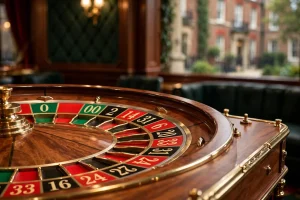
Online American Roulette Casinos in the UK
The 00 pocket distinguishes American Roulette from the single-zero European wheel and changes the odds...

European Roulette at UK Online Casinos: Rules and Odds
A guide to the single-zero wheel, betting options, table formats and how roulette bonus terms...

Online Casino Games for Real Cash in the UK
A practical guide to slot stakes, UK casino rules, bonus terms and the conditions that...

Online Casino Tournaments UK: Free Slot Entry
Tournament access can depend on a ticket or buy-in, while free entry describes only the...

Online casino without ID in the UK: what it means
A short sign-up form does not remove identity checks, which may apply before or during...

Plinko casino UK: licensing, play and payments
The guide distinguishes UKGC-regulated services from offshore platforms and explains what to check across play,...