
Live Dream Catcher Casino UK: How It Works
 Available in GB

A practical guide to the dealer-led stream, player interface and limits of claims about a specific online table.
Table of Contents
- How a Live Dream Catcher Table Works Online
- Dream Catcher Casino in 2026: What Can Be Verified
- Choosing a Live Casino Table Without a ‘Best’ List
- Playing a Live Casino Game: Pace, Bets and Connection
- What the Live Wheel Changes About Roulette
- Checking a Live Casino Site Before Playing
- Dream Catcher Demo Play: What the Evidence Does Not Confirm
- A Dream Catcher Casino Review Without Unsupported Claims
- Sweety Win Games, Slots and Providers
How a Live Dream Catcher Table Works Online
A live casino game joins two parts of the experience: a real-time video feed from a studio, where a human dealer runs the game, and an on-screen interface through which players take part. The dealer and the interface do different jobs. The dealer conducts the live action; the software displays the game to remote players and records the choices they submit.
That distinction matters when a game is described as live. The stream is not simply a computer-generated animation made to resemble a casino floor. It shows a human dealer in a studio, with gameplay transmitted as it happens. The player is not physically at the table, though: participation takes place through the digital controls presented alongside or over the video.
For a search about Dream Catcher, that general format is useful context, but it should not be mistaken for a confirmed description of a particular table. The name by itself does not establish what a specific online version looks like, which controls it uses, or how its screen is arranged. Those details can depend on the game and the way an operator presents it. The safe starting point is the live-casino model, not an assumed Dream Catcher layout.
Choosing a casino for live Dream Catcher means checking practical details as well as the game itself. This list highlights the payout information available for the operators featured on this page.
1. Revery Play
Payout speed: 1-3 business days Revery Play lists a payout speed of 1–3 business days, a useful detail to consider when choosing where to play.
2. Dieselwin
Payout speed: 1-3 business days Dieselwin lists a payout speed of 1–3 business days. This gives players a stated timeframe to bear in mind.
3. Britsino
Payout speed: 1-3 business days Britsino lists a payout speed of 1–3 business days, providing a clear practical detail for players considering the casino.
4. SpinFormula
Payout speed: 1-3 business days SpinFormula lists a payout speed of 1–3 business days. It is worth keeping this stated timeframe in mind when planning withdrawals.
5. Amunbet
Payout speed: 1-3 business days Amunbet lists a payout speed of 1–3 business days, giving players a specific timeframe to consider.
6. BeOnBet
Payout speed: 1-3 business days BeOnBet lists a payout speed of 1–3 business days. This stated detail can help set expectations around withdrawals.
7. Zombillion
Payout speed: 1-3 business days Zombillion lists a payout speed of 1–3 business days, a practical point for players to take into account.
8. SlotoSport
Payout speed: 1-3 business days SlotoSport lists a payout speed of 1–3 business days. Consider this stated timeframe when looking at the casino.
9. Jetsetspins
Payout speed: 1-3 business days Jetsetspins lists a payout speed of 1–3 business days, giving players a clear withdrawal timeframe to consider.
10. NightWin
Payout speed: 1-3 business days NightWin lists a payout speed of 1–3 business days. This is the available practical detail to note when considering the operator.
Two parts of one live game
The video stream gives remote players a view of the dealer and the action in the studio. The interface provides a way to participate without handling physical equipment. A player selects options on screen and submits them through the game software; the live stream shows the action continuing at the studio end.
In practice, the screen acts as a bridge. It translates a physical game environment into controls that can be used remotely, while the video gives the experience a visible human host and a sense of shared timing. Neither element is the whole game on its own. Video without a means to submit a decision would be only a broadcast; controls without the live feed would feel more like a conventional digital game.
I regard that division as the key to understanding live play online. The software is not the dealer, and the dealer is not operating a private screen for each player. The online service carries the studio feed and handles the player’s on-screen participation. That is the basic structure whether someone is looking for a live Dream Catcher experience or another live-dealer title.
What the interface does—and does not tell you
An on-screen interface gives players a way to interact with the game remotely. It can show the available choices and accept a selection, while the stream keeps the studio action visible. But the existence of those functions does not confirm the precise layout, labels, or sequence used by any named game. A branded game may be presented differently across services, and a familiar name is not proof that every screen works alike.
Sweety Win Games, Slots and Providers · Five-Reel Slots in the UK: How the Format Works
This is where promotional language can blur a useful distinction. “Live” describes the real-time studio format; it does not, by itself, explain every feature a player will see. Nor does it confirm that the camera angle, interface design, or game-specific presentation matches another version encountered elsewhere. Those are practical details of the particular offering, not facts that can be inferred from the words “live” and “Dream Catcher”.
When I assess a live-casino description, I separate what the format establishes from what the individual game would need to show. A human dealer and a real-time stream explain the broad setup. The on-screen controls explain how remote participation is possible. Everything beyond that—how the named table is arranged or what distinctive features it includes—needs its own confirmation.
The UK context
Live dealer casinos can operate legally in the UK when they hold a licence from the UK Gambling Commission. The relevant point is the operator’s status, not the visual style of the game. A polished studio feed does not establish that a service is authorised to offer gambling to people in Britain.
That legal framework also helps keep the terminology in perspective. “Online casino Dream Catcher” can refer to a game sought through a casino website, but the words alone do not identify the operator or establish its licence. The live format describes how the game is delivered; it is not a substitute for the regulatory status of the service carrying it.
Attention: A polished studio feed and a professional interface do not establish that a service is authorised to offer gambling to people in Britain.
The same distinction applies when a page promises an online version of a named title. The offer may be presented within a live-casino section, but the general live format is not evidence of a specific table design. It is better to understand what live play means first, then treat game-specific presentation as a separate question.
There is no physical seat at the studio table. There is a streamed view, a human dealer, and a digital interface that lets a remote player participate. That is the working model behind live casino play. The details of any particular Dream Catcher table should not be filled in by guesswork.
This is general information for entertainment, not gambling advice.
Dream Catcher Casino in 2026: What Can Be Verified
The phrase “Dream Catcher casino” can sound like the name of a casino operator, but it does not by itself identify one. It may refer to a game offered within a casino rather than to a separate gambling business. That distinction matters: a game title is not evidence of who operates the site, where its table is hosted, or which rules apply to a particular version.
For a UK player, the relevant legal point is clear. A remote operator offering real-money gambling to customers in Great Britain must hold the appropriate licence from the UK Gambling Commission. The licence belongs to the operator, not to a game name. A title appearing in a catalogue, logo or search result does not establish that the site offering it is licensed to serve the British market.
Casino Dice Games in the UK: How Online Play Works
That is the first separation I make when assessing a named live-casino game: what can be said about the format, what belongs to the operator, and what would need to be confirmed about the particular game. Mixing those categories is how ordinary descriptions turn into unsupported promises.
General live-casino facts are not game rules
Live games are streamed in real time, with players placing bets through an on-screen interface. Compared with digital versions, live games run at a slower pace, have higher minimum bets and depend on a stable internet connection. Those are useful facts about the live-casino format. They do not establish the rules, betting options, presentation or schedule of a particular Dream Catcher table.
The distinction is easy to miss in promotional language. A description may use “live” to signal a streamed experience, but that word alone does not tell how a specific game handles a round or what choices appear before play. Nor does a familiar game name prove that every casino presents an identical version. The title and the operating details are separate pieces of information.
I have seen how a broad format description can be made to sound like a product specification. “Live” becomes a promise of a particular studio; “casino” becomes an implication about the operator; and a dated page is treated as if it confirms the current table. Each step goes further than the words justify. A label is not a rulebook.
The operator and the game are different questions
A casino’s legal status is assessed at operator level. In Great Britain, real-money online gambling is legal at sites regulated by the UK Gambling Commission, and operators selling into the market must hold the relevant licence. A game name cannot substitute for that check, even when it appears in a casino’s own promotional material.
In Great Britain, real-money online gambling is legal at sites regulated by the UK Gambling Commission, and operators must hold the relevant licence.
There is a second question: whether a particular operator currently offers the named game. That is a matter of the operator’s present catalogue, not a permanent feature of the title. Catalogues can change, and a page carrying a date may remain visible after its details have changed. The year in a heading is not proof that a table is available throughout that year.
The third question concerns the table itself. A current operator listing can establish that a game is offered, but it should not be stretched into claims about rules, minimum stakes or interface features unless those details are stated for that version. These are not interchangeable confirmations. A licence does not verify a game’s rules; a game listing does not establish the operator’s licence; and a general account of live games does not settle either point.
Treat current claims as specific, not universal
A statement about a named table should be tied to the version and operator it describes. If a casino gives a rules page or table information for its own offering, that is more useful than a generic description of live play. If the information does not identify the version, it cannot safely support a detailed claim about how that version works.
This is particularly important when material is presented as current for 2026. The date can indicate when a page was prepared, but it does not independently confirm that its details remain accurate. A dated statement about availability is still only as strong as its connection to the operator and the table being described. In an industry where catalogues and conditions can change, dates need context.
Online Casino Tournaments UK: Free Slot Entry
The same discipline applies to the phrase “Dream Catcher casino UK”. It can describe a UK-facing casino that carries a game, but it is not the name of a UK licence or a guarantee that every site using similar wording is authorised. The regulated entity is the operator. That is the substance behind the label.
I would therefore keep any account of Dream Catcher narrow unless it is attached to an identifiable, current operator listing and the relevant game information. The general live format can be described without turning it into a claim about a specific table. Claims about a particular offering need to stand on their own.
That is less dramatic than a feature list, but more useful. A precise boundary is better than borrowed certainty.
Choosing a Live Casino Table Without a ‘Best’ List
A search for the best Dream Catcher casino can make the choice look like a contest between named games or operators. I would start elsewhere: with the licence, the rules displayed for the table, and the terms attached to any promotion. Those are the parts that determine whether an option is suitable; a label such as “best” does not.
For a UK player, the licence is a basic test, not a badge to interpret loosely. A casino offering real-money gambling to customers in Great Britain must hold the relevant operating licence from the UK Gambling Commission. Live dealer casinos are legal in the UK when licensed by the Commission. A foreign address or a polished live-casino page does not replace that requirement. The operator’s own site should identify the legal entity and licence details, which can then be checked against the Commission’s public register. If the information is absent, unclear or inconsistent, there is no sound basis for treating the site as a lawful UK option.
Legal Status
If the operator’s legal entity and licence details are absent, unclear or inconsistent, there is no sound basis for treating the site as a lawful UK option.
This check is separate from deciding whether a particular table is worthwhile. A licensed operator can still offer rules or conditions that do not suit a player. The licence establishes the regulatory framework; it is not an endorsement of every game, promotion or interface on the site. That distinction is easy to lose when a page puts a regulator’s name beside promotional claims.
Read the table terms before the promotional copy
Table rules are more useful than a headline. The displayed rules and paytable set out how a game settles bets and what conditions apply. They should be available before play, not buried behind a vague promise of a “premium” or “immersive” experience. I treat those adjectives as packaging. What matters is the written rule set.
For a named game such as Dream Catcher, the title alone is not enough to establish which version is being offered, what its rules are, or whether different tables have different conditions. Those details need to be shown on the actual game page. If the relevant rules cannot be found there, a general description elsewhere on the casino site is not a substitute. It is better to leave an unanswered point unanswered than to infer a rule from a familiar name.
The same approach applies to table limits and any special features displayed in the interface. The table’s own information is the place to confirm what applies. I would not treat another casino’s description, a search snippet or a promotional image as proof of the terms at the table being considered. Read the rules and paytable before playing. No assumptions.
Live Casino Lightning Roulette in the UK: How It Works
A live table is also an operating product, not simply a game title. The operator is responsible for presenting the stream, interface and rules in a way that allows the customer to make decisions. This does not mean that polished presentation improves the underlying terms. Clear labels and a well-organised screen can help explain what is happening, but they do not alter the rules or make a wager more favourable. Presentation and conditions are different things.
Treat bonuses as a separate calculation
Promotions need their own check because the advertised offer and the terms that govern it can point in different directions. A bonus may be available on an account without being usable at a live table. A specialist review of UK welcome offers describes many as free spins for slots that cannot be used at live tables. That is a report about offers reviewed, not a rule applying to every operator or promotion. The individual terms decide.
Where a promotion does apply to live games, the wagering rules may still give those games only a limited contribution. One example reported for live games is a 10% weighting. That figure should not be read as a market-wide setting: the relevant operator’s current terms determine the actual weighting. A small contribution can make a bonus take longer to clear than its headline suggests, or make it a poor match for someone intending to play mainly live games.
Do
- Locate full bonus terms before opting in
- Check eligible games and game weighting
- Verify wagering requirements and max bet limits
Don’t
- Rely on the headline amount of an offer
- Assume a bonus applies to live games without confirmation
- Ignore the terms hidden several clicks away
The practical check is to locate the full bonus terms before opting in and look for the eligible games, game weighting, wagering requirements and maximum bet limits. These are not fine print in the sense of being peripheral; they determine how the offer works. If the wording does not clearly say whether the named live game qualifies, the offer should not be assumed to apply. A bonus that cannot be used at the intended table has no value for that purpose.
I have seen promotional pages put the amount of an offer in large type and leave the operating conditions several clicks away. That layout is not proof of wrongdoing, but it does show where the commercial emphasis lies. The terms are the contract that matters. “Generous” is a sales word; eligibility and weighting are the mechanics.
Compare conditions, not rankings
A useful comparison does not need a “best” list. It can be a short check of whether each option meets the same standards: a verifiable UKGC operating licence, accessible table rules and paytable, clearly stated limits, and promotion terms that match the intended play. If one of those points cannot be established, the gap itself matters more than a ranking position.
The operator’s broader reputation or interface may be relevant, but neither should displace these checks. Nor should an apparently large welcome offer make an unsuitable table seem suitable. A player choosing a live Dream Catcher option in the UK is choosing both a game presentation and the conditions under which the operator offers it. The game name is only one part of that decision.
Mines Casino Game UK: What the Search Tells You
There is also a difference between a site’s general statement and the terms at the point of use. A page may say that live games are available, while the table-specific rules or promotion exclusions sit elsewhere. Before play, the table rules and paytable should be reviewed, and any bonus should be checked against its own conditions. If a detail is unclear, a confident banner does not resolve it.
I would set a budget before starting and keep it separate from the question of whether a bonus is available. Promotions do not change the underlying risk of gambling, and terms do not make a game a source of income. This is entertainment content, not gambling advice. A sensible choice is not the one with the loudest claim; it is the one whose licence and conditions can be understood before money is committed.
Playing a Live Casino Game: Pace, Bets and Connection
A live casino game links two things that operate at different speeds: a studio feed, where a human dealer conducts the game in real time, and an on-screen interface, where players choose and submit bets. The interface is not the game itself. It is the route by which a digital action is passed to a live table, then reflected back alongside the stream.
That distinction matters when considering a named title such as Dream Catcher. The general process is clear: a player uses screen controls to make a wager, while the live game proceeds in the studio. That does not establish which controls, betting stages or table rules a particular Dream Catcher version uses. Those details belong to the specific table, not to live games as a category.
General live-casino process
A player uses on-screen controls to make a wager, while the live game proceeds in a studio via a real-time video feed.
From selection to a submitted bet
In a typical live-game interface, the player selects a betting option and an amount, then submits the choice while betting is open. The screen communicates whether the action has been accepted and displays the live round as it unfolds. The dealer and studio equipment determine what happens at the physical table; the interface records the player’s selection and presents the result.
It is easy to treat a tap or click as if it were the whole transaction. It is not. The relevant point is whether the wager has been registered before the game moves on. A player who acts close to a deadline may find that a choice was not accepted, particularly if the connection is delayed. The status shown in the interface is more useful than assuming that a control responded simply because it was pressed.
Betting windows are part of the operating rhythm of a live table. There is time to make a selection, followed by a point at which betting closes and the round continues. The exact sequence and controls vary by game and operator, so a general description cannot substitute for the rules displayed at the table. Reading those rules and the paytable first is practical, not ceremonial: it clarifies what a selected option means and how a result is settled.
A slower rhythm, with less room to rush
Live games move more slowly than digital versions. A physical dealer has to conduct the round, and the stream shows that activity as it happens. The pace can feel less compressed than a computer-generated game, but it is not an invitation to place bets indefinitely. Each round has its own sequence, and the interface must be used within it.
Crazy Time Live Casino Game Show in the UK
The difference is operational. In a digital game, the software controls the entire process on the device. In a live game, the device receives a broadcast from a studio while sending a betting instruction back through the interface. Both parts need to work together. If the stream freezes, the next stage may not be clear; if the betting controls lag, a selection may not reach the table in time.
This is why a stable internet connection is a basic requirement rather than a quality-of-life extra. A connection that is adequate for ordinary browsing may still produce interruptions when it has to maintain a real-time video stream and process interface actions. A brief delay can make it harder to follow the round or confirm what happened. The table does not pause merely because a player’s screen has stalled.
I treat pace as part of the cost of playing, not as decoration. A live round asks for attention across the stream and the controls. Switching between screens, acting at the last moment or trying to recover a missed action can create confusion. Better to let a round pass than to assume an unconfirmed bet is active.
Minimums and the size of a decision
Live tables also tend to have higher minimum bets than digital versions. That changes how small a decision can be: a table’s minimum may rule out a stake that would be available in a software-based game. The specific minimum is set by the table and can differ, so it should be checked on the game screen before play.
A specialist review has reported that some live roulette and baccarat tables begin at around 20p, while blackjack tables often have higher starting limits. That is a source-specific observation, not a dependable rule for every operator or current table. The displayed table limit is the figure that matters at the point of play.
Some live roulette and baccarat tables may start at around 20p, while blackjack tables often have higher starting limits.
A minimum is not merely a technical setting. It determines whether the table fits a planned budget and how quickly repeated rounds could use it. Setting a budget before starting keeps the decision separate from the momentum of the live stream. If the minimum does not fit, the table is not a sensible match. Increasing a stake to make a session feel worthwhile does not change the game’s underlying uncertainty.
Keeping control of the session
The live interface can make betting feel immediate, but the stream’s pace can also encourage a player to follow each round without stopping to reassess. A clear budget and a fixed stopping point help keep decisions deliberate. Losses are not a reason to raise stakes or continue beyond those limits; winnings are not a reason to discard them either.
For a Dream Catcher title, the safe general expectation is only that live play involves an interface connected to a real-time game. Its particular betting options, timing and limits must be read on the table itself. The broad mechanics explain how live play differs from a digital game; they do not establish the rules of a specific version.
No interface removes uncertainty. A wager can be entered correctly, the stream can run smoothly, and the result can still be unfavourable. The useful measures are mundane: know the table’s rules, confirm the accepted bet, allow for the slower pace, and stop when the planned session is over.
Chicken Road Game in UK Casinos: What’s Known
What the Live Wheel Changes About Roulette
A live roulette table puts a physical wheel and a dealer at the centre of the game. The dealer spins the wheel, and the ball lands in a numbered pocket. In computerized roulette, the result is generated by a Random Number Generator instead. Both formats present roulette through a screen, but the source of the result differs: one is a live physical event, the other a computer-generated outcome.
That distinction is easy to blur in promotional language. “Live” describes the streamed wheel and dealer; it does not mean that a result can be read from the wheel’s previous spins. A physical wheel makes the process visible, but visibility is not a way to predict where the ball will land. The outcome of a spin remains uncertain.
There is another point worth separating from searches for a casino wheel or a Dream Catcher wheel: a wheel-themed game name does not establish that the game is roulette. Roulette has its own numbered layout and betting rules. The fact that both may use a wheel as part of their presentation is not enough to treat them as the same game.
European and American layouts
The practical difference between European and American roulette is visible in the green pockets. European Roulette has a single green pocket, marked 0. American Roulette has two: 0 and 00. That extra pocket changes the odds attached to the game, even though the layouts may look broadly familiar at a glance.
The stated odds of winning are 1 in 37 on a European wheel and 1 in 38 on an American wheel. The comparison matters because roulette bets are made against the wheel’s possible outcomes, not simply against the other numbers shown on the table. With an additional pocket in the American layout, there is another result to account for.
European Roulette
Features a single green pocket (0) with winning odds of 1 in 37.
American Roulette
Features two green pockets (0 and 00) with winning odds of 1 in 38.
For anyone comparing tables, the useful check is the wheel type, not just the game label. A table described as roulette may use either layout. The 00 pocket is the tell: its presence means the American version; a lone 0 indicates the European version. This is a rules difference, not a cosmetic detail.
At a live table, the dealer spins the physical wheel; at a computerized table, the Random Number Generator determines the result. Neither format changes the significance of the layout. A live camera can make the wheel and its pockets easier to see, while the number of green pockets still sets the distinction between these two versions.
I treat those as separate checks: first, whether the game is roulette at all; then, which roulette layout it uses; and finally, whether the result comes from a physical wheel or a Random Number Generator. A wheel in the name alone answers none of them. The details matter.
Checking a Live Casino Site Before Playing
A live Dream Catcher page is not, by itself, evidence that the site is authorised to offer gambling in Britain. The legal check is at operator level: remote gambling businesses serving the British market must hold the relevant UK Gambling Commission licence. A game title, studio feed or polished table interface cannot substitute for that licence.
I treat licensing as an operating condition, not a badge of quality. The UK Gambling Commission’s public register is the place to confirm an operator’s status. The business named there should correspond to the company actually running the gambling account; a familiar brand name on a page is not enough to establish that. If the operator cannot be clearly identified, the basic check has failed.
JetX Casino Game in the UK: What the Label Means
The distinction matters because live dealer casinos are lawful in the UK when operated under the required licence. That does not mean every site using live-casino imagery is licensed, or that a particular Dream Catcher table is available through every licensed operator. The game’s presence and the site’s legal status are separate questions.
Then there is the stream. Live games depend on a stable internet connection, and a short interruption can leave the video and betting interface out of step. I look at whether the stream remains watchable while the page is open and whether the interface responds consistently, rather than assuming that a site will perform well because it loads once. A weak connection can make a real-time table difficult to follow. No clever workaround.
Live games also move more slowly than digital versions and can have higher minimum bets. Those are general features of the format, not a guarantee about the terms of any particular table. The table’s own rules and displayed conditions still matter before play begins; a site-level check cannot settle them.
In Britain, online gambling is legal for adults aged eighteen and over at appropriately licensed sites, and operators must verify age before allowing deposits. These are operating safeguards, not proof that a game is suitable for every player. Set a budget before playing and keep to it.
This material is for entertainment purposes only, not gambling advice.
Before Playing Live
- Confirm operator holds a UK Gambling Commission licence
- Verify the stream and interface respond consistently
- Review the table’s specific rules and paytable
- Set a budget and a fixed stopping point
- Check bonus eligibility and wagering weightings
Dream Catcher Demo Play: What the Evidence Does Not Confirm
A free-play version of Dream Catcher should not be treated as confirmed. The name may appear alongside demo-related searches, but that alone does not establish that a playable demo exists, how it is accessed, or whether it uses the same live-dealer setup as a real-money table. I would separate those claims rather than assume that a demo button or practice mode is available.
The distinction matters because “demo” can describe different things. A game may offer a simulated version, a preview, or no free-play option at all. Those are not interchangeable. For a live-dealer game, a real table involves a studio stream and a human dealer, while the player places bets through an on-screen interface. That general format does not confirm that a particular game can be joined without staking money.
Nor does free play mean real payouts. If a practice mode is offered, any balance or result shown within it should be understood as part of that mode, not as cash that can be withdrawn. A demo cannot establish what a real-money session will cost or guarantee a particular result.
I have seen how small wording differences matter here. “Try for free” sounds like a settled feature; in practice, the terms should make clear whether the option is a playable game, a preview, or something else. If there is no clear explanation of access and whether real money is involved, the label does not answer those questions. Read the relevant terms before relying on it.
The same care applies to any live-casino offer linked to a demo. Bonus conditions can restrict which games count towards wagering, and live games may contribute only a small share. An offer’s headline does not tell the whole story; its game weighting and other conditions do.
Until a specific operator clearly identifies a Dream Catcher free-play option and explains its terms, the sound position is simple: availability and operation remain unconfirmed. This article is for entertainment purposes only, not gambling advice.
Online American Roulette Casinos in the UK
A Dream Catcher Casino Review Without Unsupported Claims
A responsible review of Dream Catcher starts by separating the general live-casino format from claims about this particular game. Live dealer games show real-time play from a studio, where a human dealer runs the action and players submit bets through an on-screen interface. That describes the format; it does not establish Dream Catcher’s rules, presentation, betting options or table features.
I treat that distinction as the basic test of a useful review. A polished stream or familiar interface may shape the experience, but neither tells us what the game’s specific rules are. Those details need to be checked against the game’s displayed rules before play. Without that confirmation, a review should not assign a rating based on assumed mechanics or describe features as though they were observed.
The same care applies to bonuses. Live games may count for only a limited share of wagering requirements; one stated example is a 10% contribution. That figure should not be treated as a universal term. The operator’s bonus conditions determine whether a particular game qualifies and how much its play contributes. A headline offer can therefore say little about whether live play helps meet its requirements. Read the conditions, not just the promotion.
3-Reel Slots in the UK: How Online Play Works
I would also keep a review’s scope clear. It can assess the general live format and explain why game-specific rules and bonus terms matter, while leaving unconfirmed details out. It should not turn an unknown into praise, criticism or a promise. “Immersive” is advertising language unless the review explains what can actually be seen or done; the presence of a live stream alone does not settle that question.
A review is not an endorsement, and a description of how live tables work is not a recommendation to gamble. Any decision to play involves risk; no account of the format can remove it. This material is for entertainment purposes only, not gambling advice. My standard is simple: describe what is established, label what depends on the operator’s terms, and avoid filling gaps with plausible-sounding detail. That is less dramatic. It is more useful.
How do you play live roulette?
Place your bet through the on-screen interface, then watch the dealer spin a physical wheel. You win if the ball lands on a number you selected.
How does the house edge change between games?
In roulette, the house edge is 2.9% on straight-up bets and 2.7% on other bets.
How can you win live dealer roulette?
You win when the ball lands on a number you selected. Live roulette uses a dealer-spun physical wheel.
How do you choose a live dealer casino?
For play in Great Britain, choose an operator that holds the appropriate licence from the UK Gambling Commission.
What is the difference between European and American Roulette?
European Roulette has one green pocket, 0; American Roulette has two, 0 and 00. The odds of winning are 1 in 37 on a European wheel and 1 in 38 on an American wheel.
Sweety Win Games, Slots and Providers

Sweety Win Live Casino: Tables and Providers
Sweety Win UK Guide Live dealer games Sweety Win has a distinct live casino section...

Aviator Casino Game UK: Licensing and Play
The guide separates UKGC-regulated operators from offshore sites and explains Aviator’s crash-game format, offers, payments...

3-Reel Slots in the UK: How Online Play Works
A guide to three-reel slot mechanics, real-money stakes, free play and the licensing rules for...

Five-Reel Slots in the UK: How the Format Works
The guide separates a five-column layout from outcomes and explains what demo spins and bonus...

Bonus Buy Slots in the UK: Demo Play Guide
Demo mode lets you inspect a slot’s controls and bonus sequence, while keeping fictional credits...

Fast Payout Online Casino UK: What Keno Shows
Learn how selected spots and catches shape keno results, and why a quick round or...
First Deposit Bonus Casinos in the UK: What to Check
A promotion’s value depends on eligibility, trigger conditions, bonus use and restrictions—not the headline alone....

High-Volatility Slots in the UK: How They Work
Volatility describes the pattern of wins, not a prediction of what any individual play will...

Online Keno Casinos in the UK: Games and Odds
Keno uses a numbered 1–80 card and a separate random draw, while rules, payouts and...

Live Casino UK: Games, Rules and Offers
Live casino combines a human dealer and streamed table action with on-screen controls, while rules...

Low-Volatility Slots in the UK: What to Know
Low volatility describes a tendency towards more frequent, smaller wins—not a promise of steady returns...

Online Slot Payout Percentage: What RTP Means
RTP describes the share of stakes a slot is designed to return over many plays,...

Best RTP Casino Slots UK: Understanding RTP
RTP describes an aggregate long-run pattern, while volatility affects how results can vary from one...
High RTP Slots in the UK: What RTP Can Tell You
RTP describes a game’s long-run theoretical return, while volatility and individual sessions shape very different...

Video Slots in the UK: Reels, Features and Play
From reel layouts and feature rounds to stake limits and casino checks, this guide explains...

Casino Dice Games in the UK: How Online Play Works
The guide separates physical rolls from computer-generated outcomes and places dice formats in the wider...

Chicken Road Game in UK Casinos: What’s Known
The name alone cannot confirm how the game works, whether it is available in the...

Crash casino games in the UK: formats and licensing
Crash games can resemble casino slots, but operator licensing and payment routes change the context....

Crazy Time Live Casino Game Show in the UK
Crazy Time pairs a real-time studio presentation with digital betting controls, while casino terms and...

Deal or No Deal Casino UK: Game and Bonus Guide
A clear look at how the online format relates to the television game, and which...

Fastest Payout Online Casinos in the UK
Payout speed depends on which stage is measured; casino claims may omit the payment method,...
French Roulette Online Casinos in the UK: Rules & Odds
See how the zero, table format, minimum stakes and bonus terms shape the cost and...

Hi-Lo Casino UK: Rules, Card Values and Play
Rules for ties, used cards and reference cards can vary, changing how each higher-or-lower decision...

JetX Casino Game in the UK: What the Label Means
The overview distinguishes marketing language from documented rules and puts demo play, offers and real-money...

Live Baccarat Online Casino UK: How It Works
See how live-dealer baccarat works within a wider casino, from hand decisions and table costs...
Live Blackjack Online in the UK: How Tables Work
A practical look at the dealer stream, table controls, rules, side bets and the limits...

Live Casino Lightning Roulette in the UK: How It Works
A practical look at live-table mechanics, roulette odds, offers and the checks that distinguish a...

Live Roulette UK with English-Speaking Dealers
A practical guide to dealer-led roulette, table formats, betting controls and the limits of claims...

Mines Casino Game UK: What the Search Tells You
A Mines search points to a subject, but it does not confirm a game's rules,...

Monopoly Live Casino UK: Format, Play and Limits
The guide separates the live-studio presentation from game rules, and explains what comparisons, stats, demo...

Online Bingo in the UK: Formats, Tickets and Slots
See how ticket formats shape bingo rounds, and how ticket limits, bonus conditions and slots...
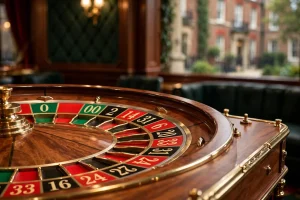
Online American Roulette Casinos in the UK
The 00 pocket distinguishes American Roulette from the single-zero European wheel and changes the odds...

European Roulette at UK Online Casinos: Rules and Odds
A guide to the single-zero wheel, betting options, table formats and how roulette bonus terms...

Online Casino Games for Real Cash in the UK
A practical guide to slot stakes, UK casino rules, bonus terms and the conditions that...

Online Casino Tournaments UK: Free Slot Entry
Tournament access can depend on a ticket or buy-in, while free entry describes only the...

Online casino without ID in the UK: what it means
A short sign-up form does not remove identity checks, which may apply before or during...

Plinko casino UK: licensing, play and payments
The guide distinguishes UKGC-regulated services from offshore platforms and explains what to check across play,...